Corning-EXG
Ultra-High HardnessHigh Light Transmittance

Corning EXG Glass

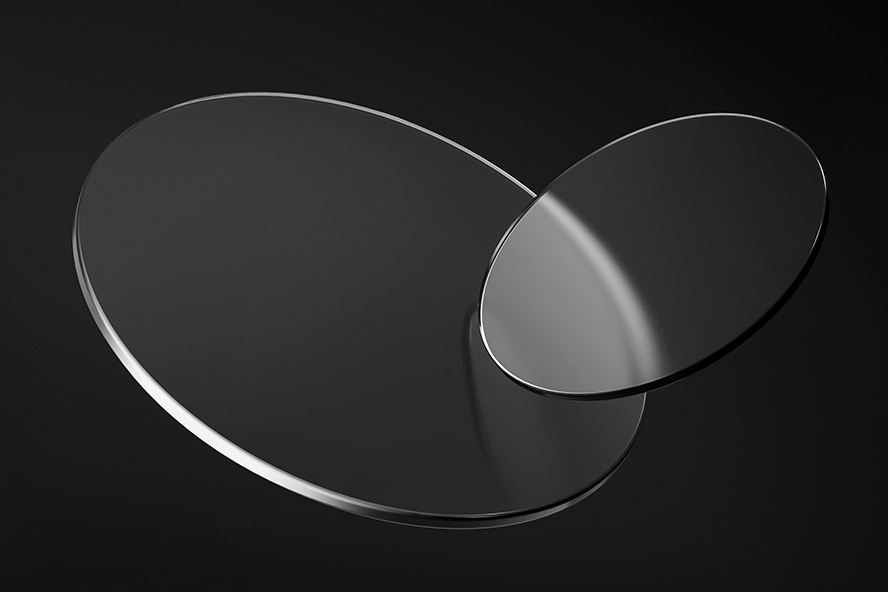
Corning EXG® glass is an advanced non-alkali metal aluminosilicate glass developed by Corning Incorporated, offering excellent dimensional stability and high surface quality.

Machining Capability

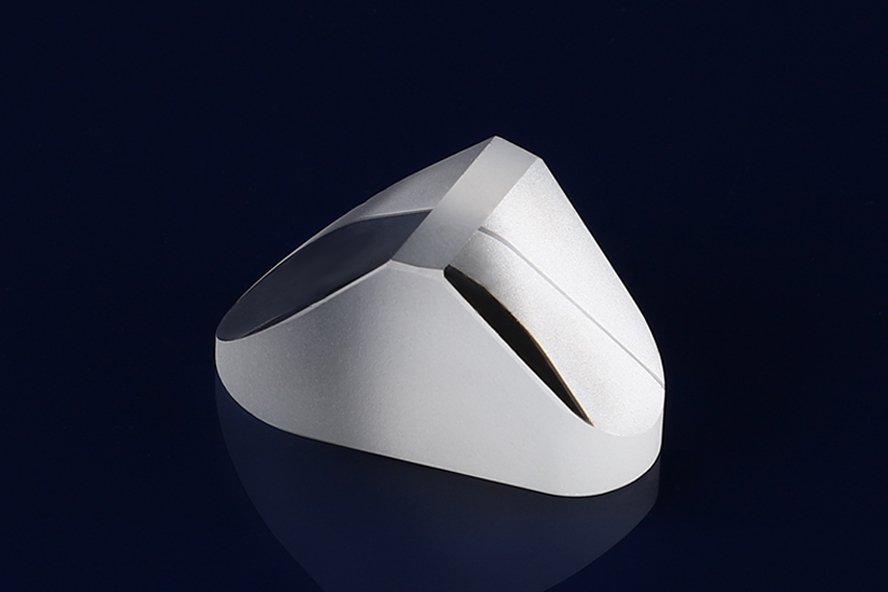
We specialize in the precision machining of Corning® EXG glass, providing high-precision components and employing advanced polishing and coating processes to meet the stringent requirements of semiconductor and optical applications.

Corning-EXG-Glass
Tolerance ±1um
Flatness 1 µm (Φ300)
Roughness Ra0.002μm
Micropores 0.1mm
Internal Thread M1.2
Max. Size Φ400mm

Advantages

  • Non-alkaline
  • Excellent thermal stability
  • Extremely high surface quality
  • Chemical resistance

Properties

Corning® EXG glass developed by Corning Incorporated has excellent performance, and its main material properties are shown in the table below.

Mechanical Properties Unit EXG
Density g/cm3 2.38
Shear Modulus GPa 30
Young's Modulus GPa 74
Poisson's Ratio 0.23
Thermal Properties Condition EXG
C.T.E. 0 - 300°C 32 x 10-7 /°C
Softening Point 10^7.6 poises 972 °C
Annealing Point 10^13 poises 722 °C
Strain Point 10^14.5 poises 669 °C
Thermal Conductivity at 25°C 1.058 W/(m·K)
Thermal Conductivity at 500°C 1.447 W/(m·K)
Electrical & Optical Condition EXG
Log10 Volume Resistivity at 25°C 23.6 ohm-cm
Log10 Volume Resistivity at 250°C 13.3 ohm-cm
Dielectric Constant 23°C, 20% RH, 1kHz 5.3
Dielectric Loss 23°C, 20% RH, 1kHz 0.10%
Refractive Index at 589.3 nm 1.51
Photo-elastic Constant 33.4 (nm/cm/MPa)
Transmittance 400 to 800 nm > 90%

Interested in Our EXG Glass Solutions?

Single Crystal Sapphire Application

Applications

  • Display panels (LCD, OLED backplanes)
  • Semiconductor processing substrates
  • Precision optical components
  • Precision mechanical components
  • Thin-film coating carriers
  • Flat panel and photonics applications

FAQS

Does EXG glass have good optical properties?
Yes, EXG glass provides excellent optical uniformity, high transmission, and low defect levels, which are critical for high-resolution display performance.
Can EXG glass be machined or customized?
Yes, EXG glass can be precision cut, ground, and processed into custom shapes, although it requires controlled handling due to its thinness and application-specific requirements.
What are the key properties of EXG glass?
EXG glass features high thermal stability, low density, excellent flatness, and superior surface smoothness. It is also free from heavy metals such as arsenic and antimony, making it more environmentally sustainable.

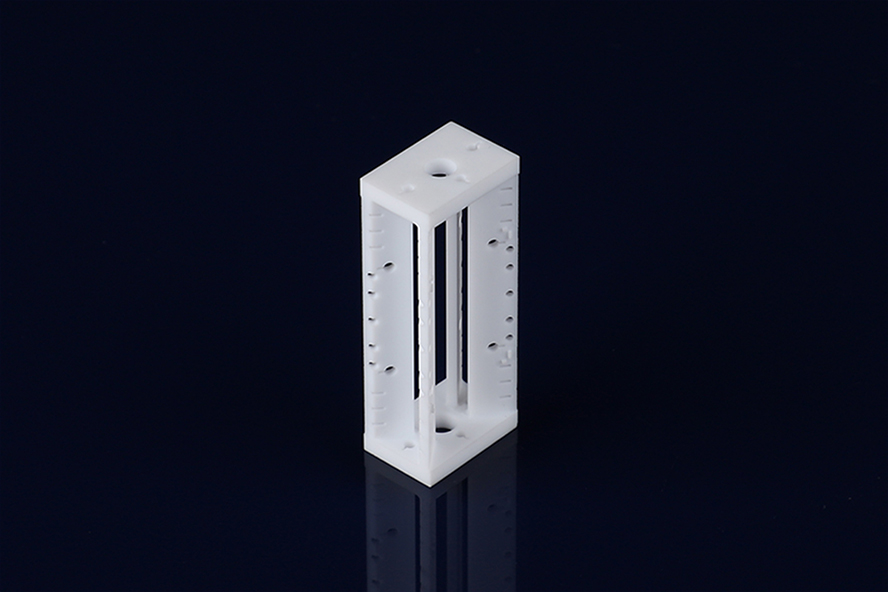
Macor is a machinable glass-ceramic made from fluorophlogopite mica crystals embedded in a borosilicate glass matrix. This composition gives it a rare
combination of metal-like machinability, excellent electrical insulation, low thermal conductivity, and stability up to 1000°C (no load) while maintaining very tight tolerances.