ニュースナレッジ
When considering silicon carbide for equipment components, you might wonder about the difference between Reaction Bonded 炭化ケイ素 (RBSiC) and Pressureless Sintered 炭化ケイ素 (SSiC)—after all, aren’t they both silicon carbide?
Our goal today is to explain the differences between these two materials, because choosing the right material isn’t about buying the most expensive option—it’s about selecting the one that best fits your application. Otherwise, it’s like buying a heavy-duty pickup truck when all you really need is a family sedan.
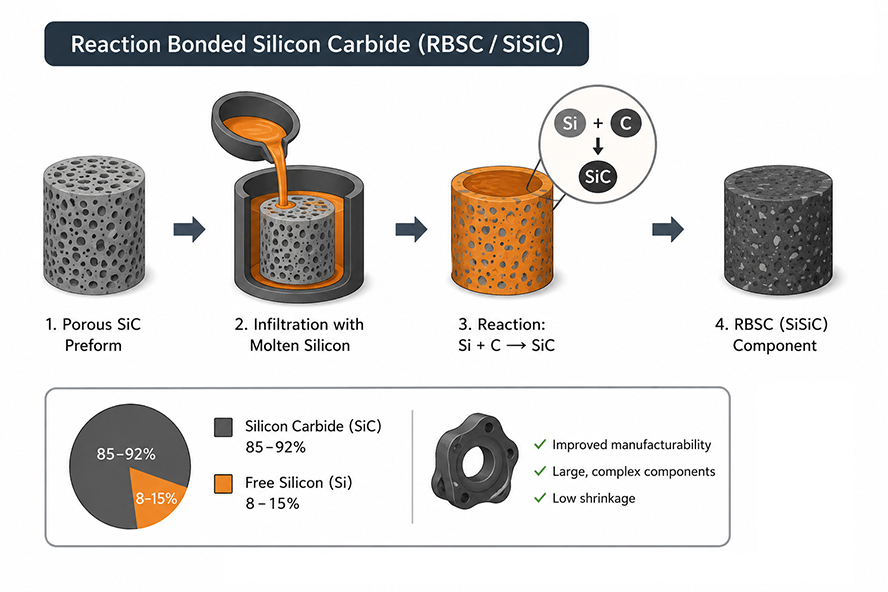
反応焼結炭化ケイ素(RBSC)は、シリコン含浸炭化ケイ素(SiSiC)とも呼ばれ、多孔質の炭化ケイ素プリフォームに溶融シリコンを含浸させて製造されます。
During the infiltration process, molten silicon reacts with carbon to form new silicon carbide, while 8–15% free silicon remains within the material; this improves the material’s machinability, making it suitable for large, complex components.
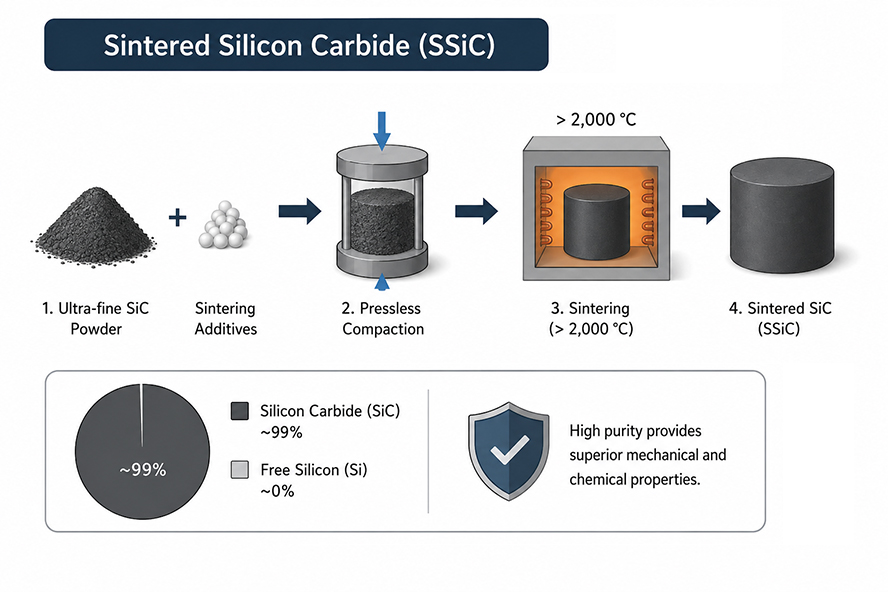
焼結炭化ケイ素(SSiC)は、超微細な炭化ケイ素粉末を焼結助剤と混合し、2,000°Cを超える温度で焼結して製造されます。
反応焼結炭化ケイ素(RBSC)とは異なり、SSiCには遊離シリコンがほとんど含まれず、炭化ケイ素含有量は最大99%です。
この高純度により、SSiCは優れた機械的・化学的特性を発揮します。
| RBSiC | SSiC |
|---|---|
| ニアネットシェイプ製造 | 極めて高い硬度 |
| 優れた寸法安定性 | 優れた耐食性 |
| 大型部品対応可能 | より高い曲げ強度 |
| 高い熱伝導率 | 優れた破壊靭性 |
| 優れた耐摩耗性 | 優れた耐摩耗性 |
| 大型部品にコスト効率が良い | 優れた高温性能 |
| RBSiC | SSiC |
|---|---|
| メカニカルシールリング | 真空チャック |
| 熱交換器チューブ | 精密セラミックベアリング |
| バーナーノズル | 高速メカニカルシール |
| ポンプ部品 | ガス噴射板 |
| サイクロンライナー | ウェハハンドリング部品 |
| 特性 | RBSiC | SSiC |
|---|---|---|
| 密度 | 3.02–3.10 g/cm³ | 3.10–3.15 g/cm³ |
| 硬度 | 2200–2400 HV | 2500–2800 HV |
| 曲げ強度 | 250–350 MPa | 380–500 MPa |
| 弾性率 | ~410 GPa | ~420 GPa |
| 熱伝導率 | 120–180 W/m·K | 120–170 W/m·K |
| 最高使用温度(大気中) | ~1380°C | ~1600°C |
| 耐食性 | 良好 | 優れる |
| 耐摩耗性 | 優れる | 卓越 |
The same feature that gives RBSC its manufacturing advantages also creates its limitations. Because a small amount of free silicon remains in the material, it cannot withstand temperatures as high as pressureless sintered silicon carbide, and its corrosion resistance is reduced in some aggressive chemical environments. Its hardness and mechanical strength are also lower, so while RBSC is an excellent choice for many industrial applications, it isn’t always the best option when maximum performance is required.
Of course, superior performance doesn’t come without trade-offs. Think of it like a high-performance sports car—it delivers exceptional capabilities, but you’ll pay a premium for them.
無加圧焼結炭化ケイ素(SSiC)も同様です。そのより要求の厳しい製造工程と高い材料純度により、RBSCよりも大幅に高価になります。優れた硬度は使用時には大きな利点となりますが、加工をはるかに困難にし、多くの場合、カスタムダイヤモンド工具と長い加工時間が必要になります。さらに、焼結時に発生する大きな収縮により、大型または非常に複雑な部品の製造がより困難で経済的ではなくなります。
It’s also less practical for large or complex components—unless your budget allows for it.
At the end of the day, there isn’t a universally “better” silicon carbide—only the one that’s better suited to your application.
Our goal isn’t to convince you that one material is superior to the other. Instead, we hope this article has given you a clearer understanding of the differences between Reaction Bonded 炭化ケイ素 (RBSC) and Pressureless Sintered 炭化ケイ素 (SSiC), so you can make informed decisions and avoid paying a premium for the wrong material.
One last thing we’d like to mention: choosing the right material is only half the equation. Precision machining is just as important to the performance of the final component.
RBSiCでもSSiCでも、両方の材料を高精度のカスタム部品に加工する専門知識を備えています。いつでもご連絡いただき、ご意見をお聞かせください。

Chinese (Simplified)

English

German

Japanese

Spanish
Floors 1-2, Building 3, Qianyuan Industrial Park, No. 2 Gaoxin 2nd Road, Dalang Town, Dongguan, Guangdong, China(523770)