zerodur
Ultra-low thermal expansionDimensional stability

Zerodur

Zerodur glass-ceramic has an ultra-low coefficient of thermal expansion, which allows it to maintain excellent dimensional stability even under temperature fluctuations, with minimal changes in mechanical and thermal properties, Suitable for lightweight machining, often used in high-precision applications.
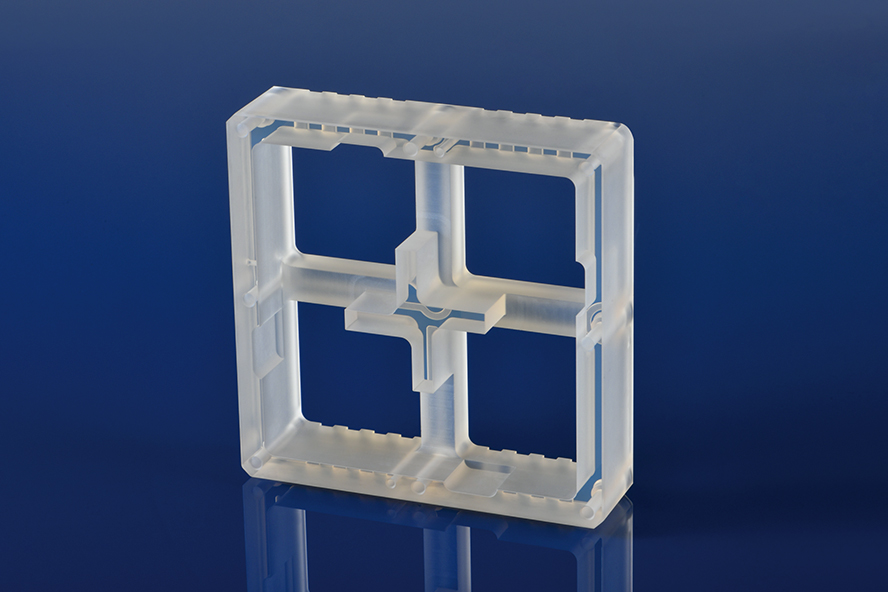
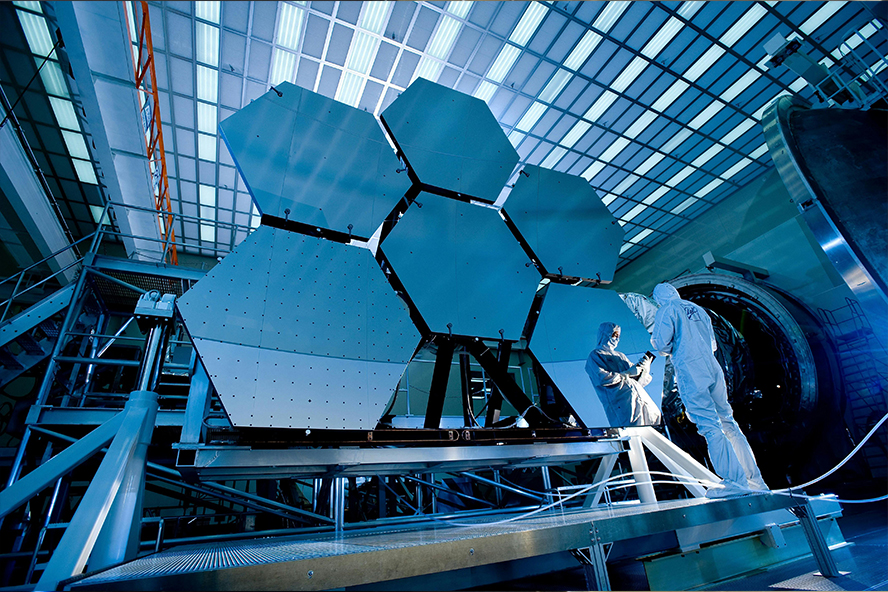
Machining Capability

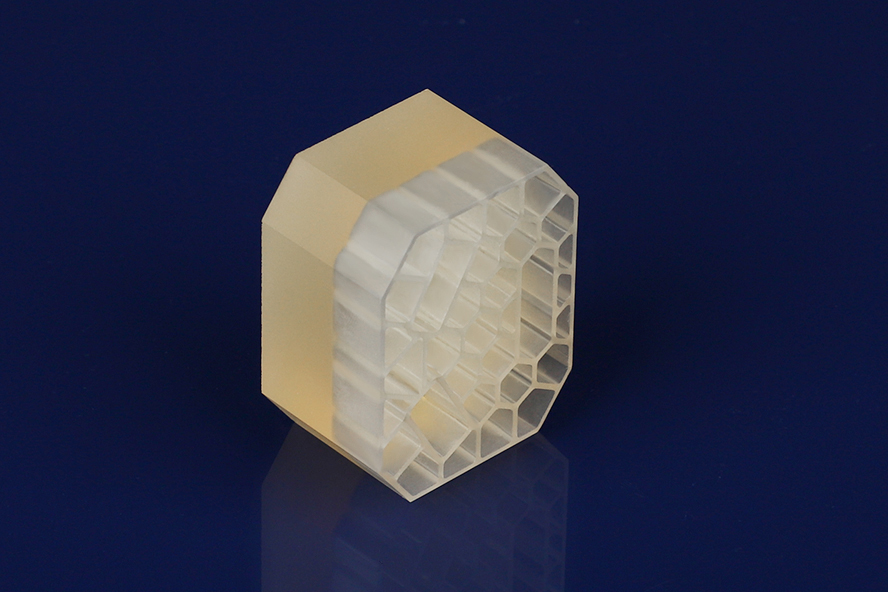
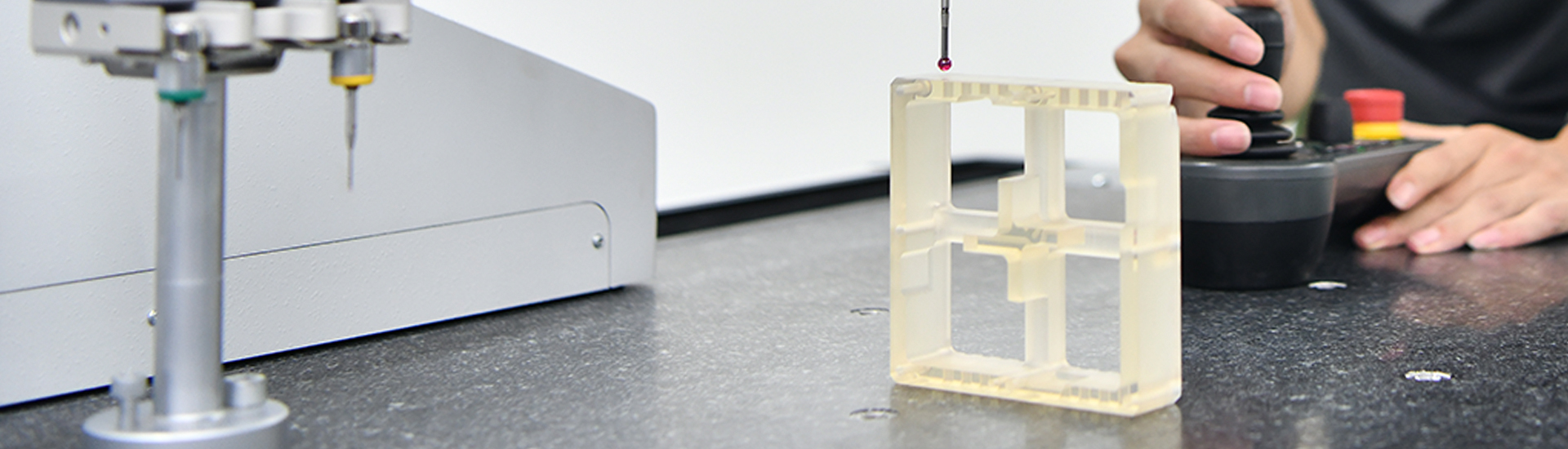
Zerodur glass-ceramic is commonly used for optical components and other lightweight, complex structural parts. We provide precision machining of Zerodur components, supporting custom shapes and curved surfaces. Our advanced manufacturing capabilities enable us to produce high-precision parts that meet the demanding requirements of high-end applications.

Aluminum-nitride-ceramics
Tolerance ±1um
Flatness 1/20λ
Roughness Ra0.03μm
Micropores 0.1mm
Lightweight 70%
Max. Size 500*500mm

Advantages

  • Easily machinable with standard metalworking tools-no post-firing needed
  • Ultra-tight tolerances:up to 0.0005 in (0.013 mm).
  • Non-porous UHV-friendly:zero outgassing,ideal for vacuum systems.
  • High temperature stability:continuous use up to 1000C.
  • Excellent insulator:low thermal conductivity.
  • Chemical resistant:withstands acids,bases,and solvents.
  • High strength rigidity:no creep or deformation at high temperatures.

Properties

Zerodur, developed by SCHOTT AG, is an ultra-low thermal expansion glass-ceramic with exceptional dimensional stability and high precision performance. The key material properties are shown in the table below.

Physical Properties ZERODUR® ZERODUR® K20
Density ρ [g/cm³] 2.53 2.53
Poisson's ratio 0.24 0.25
CTE 25°C – 600°C 112 × 10⁻⁷/°C 62 × 10⁻⁷/°F
Knoop Hardness HK 0.1/20 (ISO9385) 620 620
Refractive index nd 1.5424
Abbe number vd 56.1
Thermal conductivity λ at 20°C [W/(m·K)] 1.46 1.63
Thermal diffusivity index at 20°C [10⁻⁶ m²/s] 0.72
Heat capacity cp at 20°C [J/(g·K)] 0.8 0.9
Young's modulus E at 20°C [GPa] (mean value) 90.3 84.7
Internal transmittance Ti at 580 nm / 5 mm thickness 0.95
Internal transmittance Ti at 580 nm / 10 mm thickness 0.9
Stress optical coefficient K at λ = 589.3 nm [10⁻⁶ MPa⁻¹] 3
Electrical resistivity at 20°C [Ω·cm] 2.6 × 10¹³
Tk100 [°C], Temperature for ρ = 10⁸ [Ω·cm] 178
Chemical properties ZERODUR® ZERODUR® K20
Stain resistance Class 0
Climate resistance Class 1
Acid resistance class (ISO 8424) 1
Alkali resistance class (ISO 10629) 1
Hydrolytic resistance class (ISO 719) HGB 1
Helium permeability at 20°C [Atoms/(cm·s·bar)] 1.6 × 10⁶
Helium permeability at 100°C [Atoms/(cm·s·bar)] 5.0 × 10⁷
Helium permeability at 200°C [Atoms/(cm·s·bar)] 7.2 × 10⁸
Thermal expansion ZERODUR®
CTE Grades CTE (0°C–50°C)*
ZERODUR® Expansion Class 2 0 ± 0.100 × 10⁻⁶/K
ZERODUR® Expansion Class 1 0 ± 0.050 × 10⁻⁶/K
ZERODUR® Expansion Class 0 0 ± 0.020 × 10⁻⁶/K
ZERODUR® Expansion Class 0 SPECIAL 0 ± 0.010 × 10⁻⁶/K
ZERODUR® Expansion Class 0 EXTREME 0 ± 0.007 × 10⁻⁶/K
ZERODUR® TAILORED TAILORED ± 0.020 × 10⁻⁶/K (+0.010 ~ +0.010 × 10⁻⁶/K upon request)

Interested in Our Zerodur Glass Solutions?

Zerodur application

Applications

  • Laser gyroscope mirrors, brackets, and components
  • Interferometers, optical tables, and length measurement systems
  • Spectrometer optical components
  • Semiconductor lithography parts
  • Wafer stepper components
  • Mechanical laser resonator parts

Cases

View our video on 5-axis machining Zerodur

FAQS

Are there any other low-expansion glass materials?

Of course, besides Zerodur and ULE, other common low-expansion glasses you can consider include fused silica, Clearceram, BF33, and other materials.

What thermal expansion rating of zerodur glass can you provide?

Jundro offers machining services for Zerodur materials with thermal expansion coefficients ranging from Expansion Class 0 to Expansion Class 0 EXTREME, selectable based on your specific needs.

How to choose between Zerodur and ULE?

Both Zerodur and ULE are relatively high-cost materials with coefficients of thermal expansion (CTE) close to zero. Zerodur offers multiple adjustable CTE grades, but it is opaque, making it more suitable for structural components. In contrast, ULE provides more uniform CTE and is fully transparent, making it ideal for optical applications.

Do you support prototyping and small-to-medium batch machining of Zerodur components?

Yes. Jundro provides precision machining services for Zerodur, supporting both rapid prototyping and small-to-medium volume production.Our team ensures stable quality, fast turnaround, and engineering support, helping you move efficiently from prototype to production.

Is Zerodur suitable for lightweight machining?

Zerodur is highly suitable for lightweight component machining, especially in applications requiring extreme dimensional stability.Jundro has the capability to machine complex lightweight structures, including deep cavities and honeycomb designs, while maintaining tight tolerances and structural integrity.

Macor is a machinable glass-ceramic made from fluorophlogopite mica crystals embedded in a borosilicate glass matrix. This composition gives it a rare
combination of metal-like machinability, excellent electrical insulation, low thermal conductivity, and stability up to 1000°C (no load) while maintaining very tight tolerances.