
NewsQuality & Process
Low thermal expansion glass materials are widely used in high-end industries such as optics, semiconductor equipment, and laser systems, where dimensional stability under temperature fluctuations is critical.
Among these, five materials—Zerodur, ULE, ClearCeram, Borosilicate Glass (BF33), and Fused Quartz—are the most commonly used low-CTE materials in precision engineering and also represent the majority of our machining projects.
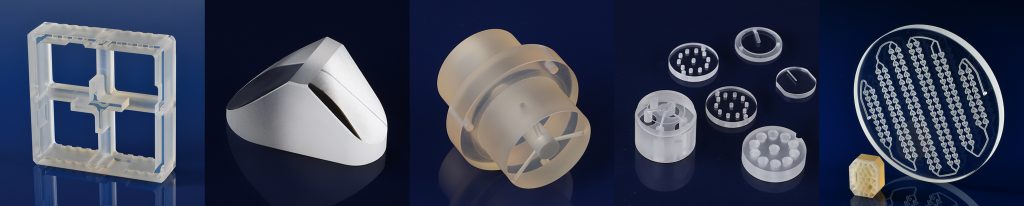
Developed by SCHOTT, Zerodur® is a glass-ceramic material with a near-zero coefficient of thermal expansion. It is available in multiple CTE grades to meet different precision requirements.
Typical applications:
Laser gyroscopes, spectrometers, and semiconductor lithography components.
Manufactured by Corning Incorporated, ULE® is often compared directly with Zerodur® due to its similarly low CTE.
It offers excellent optical homogeneity and dimensional stability, making it highly suitable for precision optical systems.
Typical applications:
Astronomical telescopes, laser resonators, and ultra-stable optical structures.
ClearCeram® is a low thermal expansion glass-ceramic material developed by Ohara Corporation. Through controlled crystallization, it achieves near-zero CTE while offering improved mechanical strength and thermal shock resistance.
Typical applications:
Precision optical components, metrology equipment, and semiconductor-related structures.
Borosilicate Glass (BF33) is a widely used industrial glass material with a relatively low coefficient of thermal expansion, excellent chemical resistance, and high optical transmission in the visible range.
Typical applications:
Semiconductor process windows, inspection ports, and laboratory equipment.
Fused Quartz is a high-purity silicon dioxide (SiO₂) glass known for its low thermal expansion and outstanding optical transmission from deep ultraviolet (UV) to near-infrared (NIR) wavelengths.
Typical applications:
Laser systems, UV optics, photonics components, and high-performance semiconductor windows.
| Material | Typical CTE (α, ×10⁻⁶ /K) | Thermal Stability Level |
|---|---|---|
| Zerodur | ~0 ± 0.02 | Ultra-low |
| ULE | ~0 ± 0.03 | Ultra-low |
| ClearCeram | ~0 ± 0.1 | Ultra-low |
| Borosilicate (BF33) | ≈ 3.3 | Medium |
| Fused Quartz | ≈ 0.5 | Very low |
Need ultra-high dimensional stability (nano/sub-micron level)?
→ ULE® or Zerodur® Need low expansion with better mechanical strength?
→ ClearCeram® or Zerodur® Need chemical resistance with moderate thermal performance?
→ Borosilicate Glass (BF33) Need UV transparency and high laser resistance?
→ Fused Quartz Working with limited budget and less demanding thermal conditions?
→ BF33 or alternative cost-effective substrates
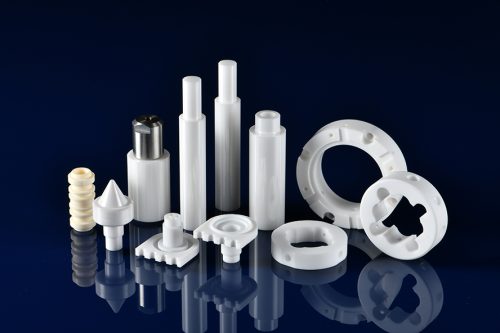
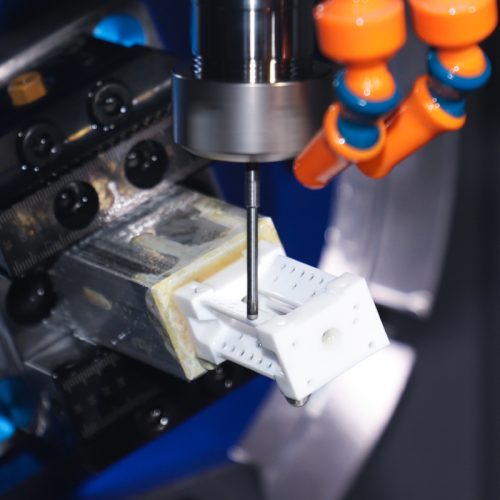
At Jundro, we specialize in ultra-precision machining of low thermal expansion materials, enabling the fabrication of complex geometries such as curved surfaces, intricate structures, lightweight designs, and honeycomb configurations. With advanced machining capabilities, we achieve optical flatness up to λ/20, maintain tight tolerances for critical components, and offer optional optical coating services to meet demanding application requirements. If you are working in precision optics, semiconductor equipment, or laser systems, we are ready to support your material selection and machining needs with reliable, high-performance solutions.

Chinese (Simplified)

English
German
Japanese

Spanish
Floors 1-2, Building 3, Qianyuan Industrial Park, No. 2 Gaoxin 2nd Road, Dalang Town, Dongguan, Guangdong, China(523770)