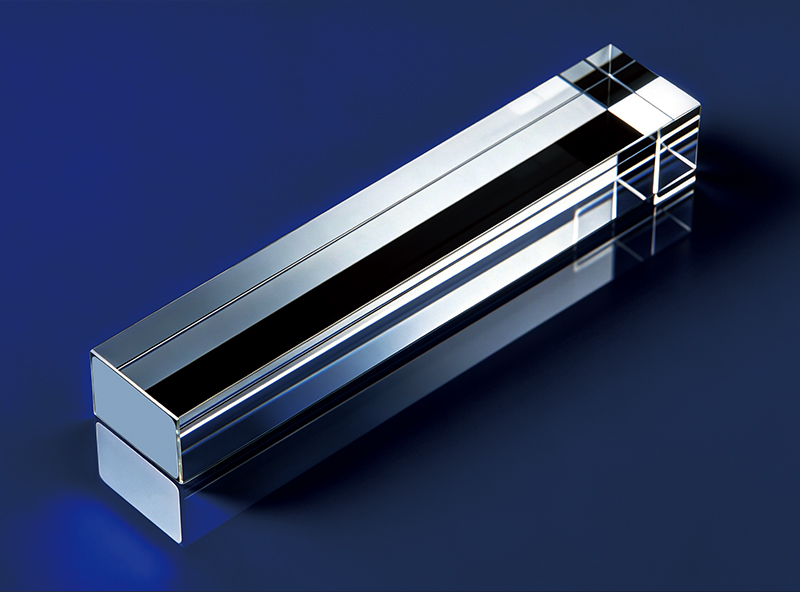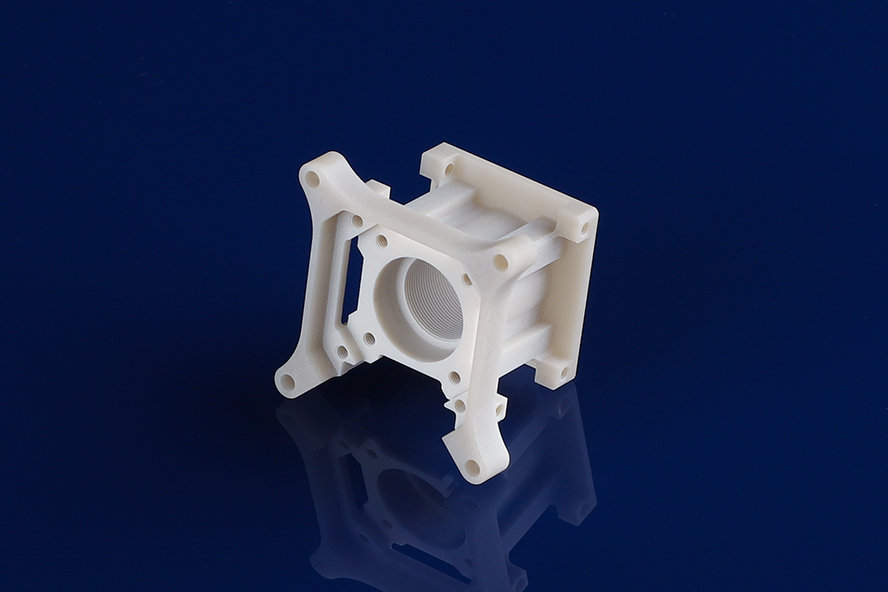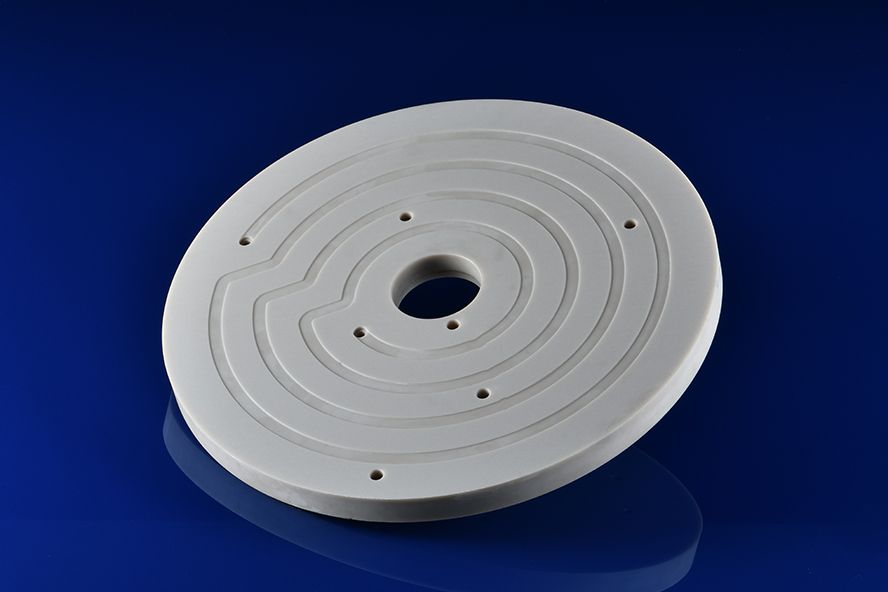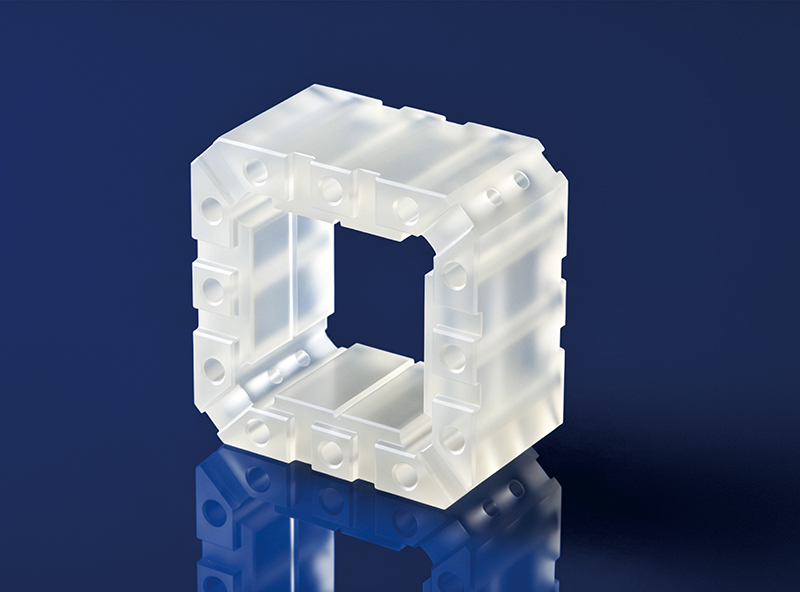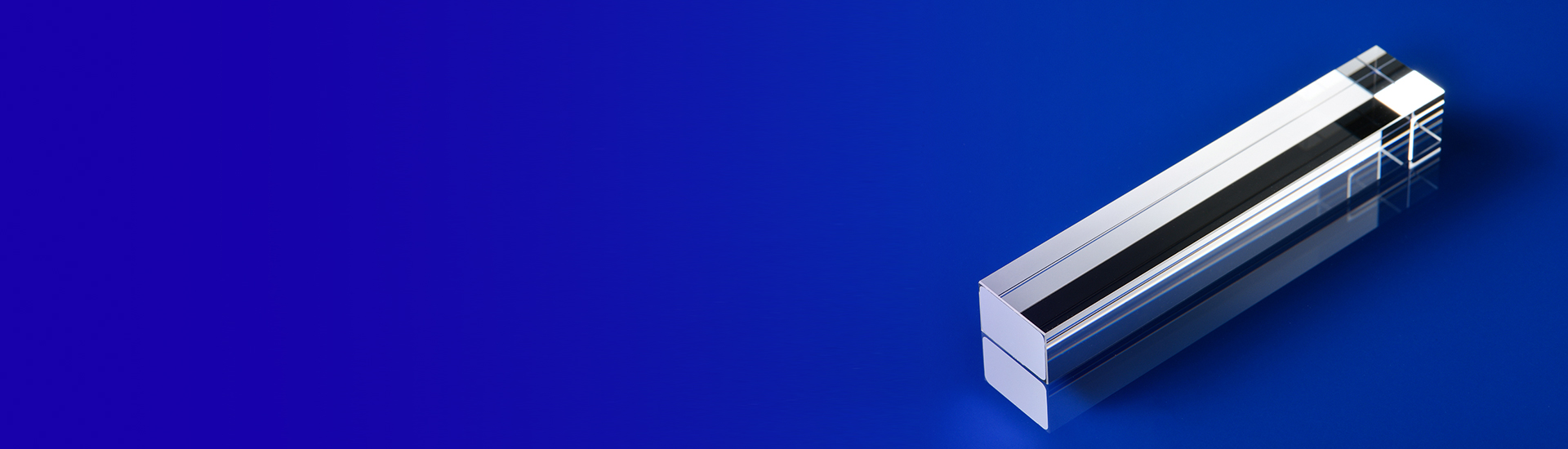
We provide precision machining services for ULE (Ultra-Low Expansion) glass, supporting the manufacturing of high-precision optical and structural components.
Our machining capabilities include complex geometries, curved surfaces, thin-wall structures, and lightweight designs, ensuring excellent dimensional stability and surface quality.

The following is ULE Glass Properties, data sourced from Corning Incorporated.
| Material Properties | Unit | ULE |
|---|---|---|
| Density | g/cm³ | 2.21 |
| Poisson’s Ratio | – | 0.17 |
| Shear Modulus | GPa | 29 |
| Bulk Modulus | GPa | 34.1 |
| Elastic Modulus | GPa | 67.6 |
| Specific Stiffness, E/ρ | m | 3.12 × 10⁶ |
| Ultimate Tensile Stress | MPa | 49.8 |
| Knoop Hardness, 200g load | kg/mm² | 460 |
| Thermal Properties | Unit | ULE |
|---|---|---|
| Strain Point | °C | 890 |
| Annealing Point | °C | 1000 |
| Softening Point, estimated | °C | 1490 |
| Mean Specific Heat, Cp | J/(kg·°C) | 767 |
| Thermal Diffusivity, D | cm²/s | 0.0079 |
| Thermal Conductivity, K | W/(m·°C) | 1.31 |
| D.C. Volume Resistivity | ohm·cm | 10¹⁶ |
| Mean Linear Coefficient of Thermal Expansion | 10⁻⁷/K | 0 ± 30 |
| Optical Properties | Unit | ULE |
|---|---|---|
| Stress Optical Coefficient | (nm/cm)/(kg/cm²) | 4.15 |
| Abbé Number (v&damp;) | — | 53.1 |
| dn/dt 20–40°C | 10¹⁶/°C | 10.68 |
| dn/dt 40–60°C | 10¹⁶/°C | 11.24 |
| Refractive index (nF) | 486 nm | 1.4892 |
| Refractive index (nD) | 589 nm | 1.4828 |
| Refractive index (nC) | 656 nm | 1.4801 |

ULE glass (Ultra-Low Expansion glass) is a titania-silicate glass developed for applications requiring near-zero thermal expansion. The key difference between ULE and fused silica lies in their thermal behavior and composition. ULE contains titanium dioxide, which significantly reduces its coefficient of thermal expansion (CTE) to near zero, making it highly stable under temperature fluctuations. In contrast, fused silica is pure SiO₂ with excellent thermal resistance and optical properties but has a higher CTE than ULE, meaning it is more sensitive to temperature-induced dimensional changes.
When choosing between ULE and Zerodur, the decision depends on application requirements. ULE is an amorphous glass, offering excellent homogeneity, no grain boundaries, and superior performance in precision optical systems, especially in aerospace and lithography. Zerodur, on the other hand, is a glass-ceramic with a similarly low CTE but provides higher mechanical strength and better resistance to deformation under load. It is often preferred for large structural components such as telescope mirrors, where stiffness and long-term dimensional stability under gravity are critical.
ULE glass typically has a near-zero CTE, usually in the range of 0 ± 30 ppb/°C, depending on the grade and processing, ensuring outstanding thermal stability.
ULE glass has moderate mechanical strength compared to ceramics or glass-ceramics. While it is sufficient for many precision applications, design considerations are important to avoid mechanical stress concentrations.
Yes, we offer custom ULE glass machining and fabrication services. With advanced CNC capabilities, including 3-axis, 4-axis, and 5-axis machining, we can produce high-precision ULE components tailored to your specifications. Our services cover complex geometries, tight tolerances, and high surface quality requirements for demanding applications in optics, aerospace, and semiconductor industries.
Macor is a machinable glass-ceramic made from fluorophlogopite mica crystals embedded in a borosilicate glass matrix. This composition gives it a rare
combination of metal-like machinability, excellent electrical insulation, low thermal conductivity, and stability up to 1000°C (no load) while maintaining very tight tolerances.
English
German
Japanese
Spanish
Industrial Zone,
City, Country