
NewsKnowledges
Technical ceramics possess many properties that neither metals nor plastics have. However, if you’re looking to select the right material for your specific application, this guide to the best technical ceramics will help you clarify your material requirements.
Since 2019, we have been machining technical ceramics, investing 61,000 hours in the process. We have selected seven materials that represent the best technical ceramics for applications such as insulation, thermal management, and extreme wear.
These include the most widely used option: alumina ceramics; aluminum nitride, which offers high thermal conductivity; Macor, ideal for complex structures; as well as silicon nitride and silicon carbide, designed for use in harsh environments.
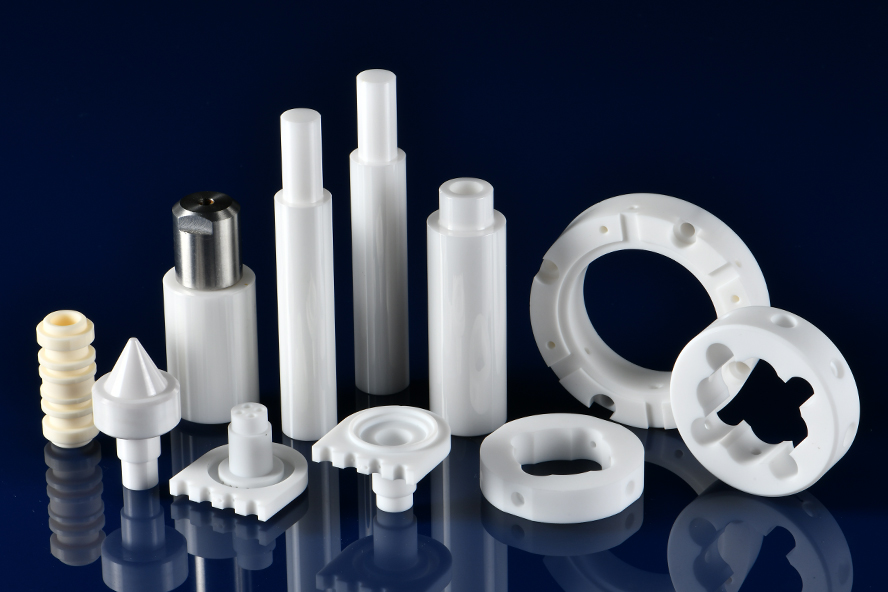
It has been seven years since we first began working with technical ceramics. Throughout this time, we have gone beyond simply recommending materials based on technical data sheets; we provide tailored material selections by carefully considering each client’s specific operating environment, usage conditions, and cost requirements. From semiconductors and aerospace to medical applications and industrial machinery, we deliver precision processing services to clients across a diverse range of industries every single day.
For example, in 2019, a procurement representative from JABIL approached us with a suction cup for semiconductor equipment, asking for advice on processing and material selection. For semiconductor-grade parts, material selection cannot be based solely on performance specifications. By understanding their operating environment, contamination risks, and the requirement for a high degree of flatness, we ultimately recommended silicon nitride ceramic.
The most suitable material is not necessarily the one with the highest single specification, but rather the one selected based on actual needs.
You might be developing a semiconductor wafer chuck, an electrical insulator, a high-temperature fixture, a precision positioning component, or a wear-resistant mechanical part.
Perhaps you’re replacing an existing metal component with ceramic. Or maybe you’re working with a drawing that specifies a particular material, but you’re unsure whether another ceramic could offer better performance or lower manufacturing costs.
Whatever the application, the first thing to understand is that different ceramics solve different engineering problems.
When people think of technical ceramics, alumina is probably one of the first materials that comes to mind.
It offers a well-balanced combination of hardness, electrical insulation, and wear resistance. With different purity grades available, alumina can meet the requirements of a wide range of industrial applications. For many applications, it is a practical and cost-effective choice.
However, purity matters. Higher-purity alumina generally offers better electrical insulation and chemical resistance, while its mechanical properties also depend on the material grade and manufacturing process.
Its main advantage is its balance of properties and cost, rather than exceptional performance in any one area. If your application does not demand specialized material properties and budget is an important consideration, alumina is often a sensible choice.
Our pick: Alumina for general-purpose precision ceramic components, electrical insulation, and wear-resistant applications where a good balance of performance and cost is required.
When it comes to heat dissipation, aluminum nitride is definitely one of the technical ceramics you should prioritize.
Some might ask, “Beryllium oxide has a much higher thermal conductivity than aluminum nitride, so why isn’t it recommended?”
That’s a good question. Beryllium oxide does indeed have excellent thermal conductivity; however, beryllium oxide dust is toxic, so for health and safety reasons, we do not recommend it. Aluminum nitride, on the other hand, poses no toxicity risks and has a coefficient of thermal expansion very close to that of silicon, making it highly suitable for electronic packaging and semiconductor equipment.
Of course, the limitations of aluminum nitride are also very clear: it is too expensive. The raw material cost ranges from 5,000 to 6,000 per kilogram, and when combined with the costs of machining and forming, the total cost becomes quite high. Furthermore, aluminum nitride is prone to hydrolysis, which is something to be mindful of.
Our pick: Aluminum nitride for heat sinks, electronic substrates, semiconductor components, and other applications requiring high thermal conductivity alongside electrical insulation.
Due to its outstanding resistance to wear, high temperatures, and corrosion, silicon carbide (SiC) offers significant value in industrial components such as seals, bearings, and semiconductor equipment. The limitation of silicon carbide does not lie in the cost of raw materials (unless you are using hot-pressed silicon carbide), but rather in the high cost of machining. Since SiC has a hardness comparable to that of diamond, this means we need to custom-manufacture specialized cutting tools, and the machining time required is also longer than for other materials.
Our pick:Suitable for wear-resistant parts, semiconductor equipment components, high-temperature applications, and parts used in harsh operating conditions.
Zirconia has the highest fracture toughness of all technical ceramics. It can control crack propagation through phase transformation toughening, and its crack resistance and impact resistance are superior to those of alumina and other materials. It is particularly well-suited for wear-resistant components, such as bearings and pistons. However, zirconia may yellow under high-temperature conditions, and it has a low thermal conductivity.
Our pick: Zirconia for precision wear-resistant components, mechanical parts subject to friction or impact, and applications where greater fracture toughness is required.
Silicon nitride offers a combination of mechanical strength, fracture toughness, and thermal shock resistance that makes it stand out among technical ceramics.
It maintains high strength at high temperatures and has a low coefficient of thermal expansion, performing exceptionally well under extreme temperature fluctuations. This characteristic is particularly important for components that undergo repeated thermal cycling and high-speed motion.
Our pick: Silicon nitride for precision bearings, semiconductor components, and mechanical parts exposed to thermal cycling, high loads, or demanding operating conditions.
Macor is arguably the most widely used material for research and development prototypes in recent years.Due to Macor’s machinability, many complex structures are much easier to produce with it than with other materials.
In addition, it offers excellent electrical insulation properties and is characterized by zero porosity and zero outgassing.However, Macor has poor hardness and wear resistance, and the cost of raw materials is relatively high, at approximately 6,000–7,000 per kilogram.
If your product requires small-batch validation and features a complex structural design, Macor is an excellent choice.
Our pick: Macor for complex precision components, electrical insulation parts, vacuum equipment
Boron nitride is a family of ceramic materials with properties that depend strongly on their crystal structure and grade.
Hexagonal boron nitride (h-BN) is particularly useful because it combines electrical insulation, good thermal stability, and relatively easy machinability. It also has a naturally low-friction surface, making it suitable for applications where lubrication is difficult or undesirable.
However, boron nitride should not be treated as a single material with uniform properties. Different grades have significantly different mechanical strength, thermal conductivity, and machinability. Compared with dense structural ceramics such as silicon carbide or silicon nitride, many h-BN grades have lower mechanical strength and wear resistance.
Our pick: Hexagonal boron nitride for high-temperature electrical insulation, low-friction components, and specialized thermal applications where its combination of properties is needed.
| Material | Hardness (GPa) | Density (g/cm³) | Thermal Conductivity (W/m·K) | Maximum Service Temperature (°C) | Machining Difficulty | Material Cost |
|---|---|---|---|---|---|---|
| Alumina | 18 | 3.93 | 30.8 | 1765 | Moderate | Low |
| Aluminum Nitride | 11 | 3.34 | 179.2 | 1350 | Moderate | High |
| Silicon Carbide | 29 | 3.15 | 110 | 1600 | Difficult | Medium |
| Zirconia | 13 | 6.02 | 3 | 1000 | Difficult | Medium |
| Silicon Nitride | 15 | 3.2 | 25 | 1400 | Difficult | Medium |
| Macor | 0.25 | 2.52 | 1.46 | 800 | Easy | High |
| Boron Carbide | 33 | 2.5 | 42 | 1000 | Difficult | High |
There are many types of technical ceramics, and this guide does not list all of them. For example, in addition to MACOR, there is also SHAPAL among machinable ceramics—a material designed for thermal management. If you are weighing different options or need customized material recommendations based on your drawings, please contact our team, and we will assist you in evaluating your application requirements.


Chinese (Simplified)

English

German

Japanese

Spanish
Floors 1-2, Building 3, Qianyuan Industrial Park, No. 2 Gaoxin 2nd Road, Dalang Town, Dongguan, Guangdong, China(523770)