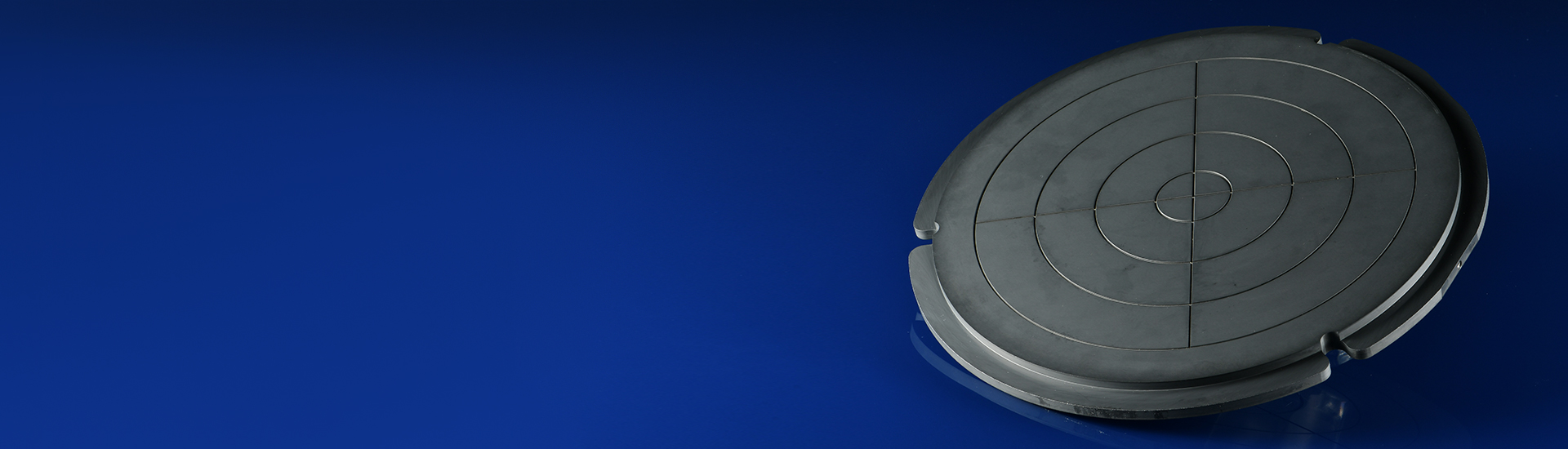
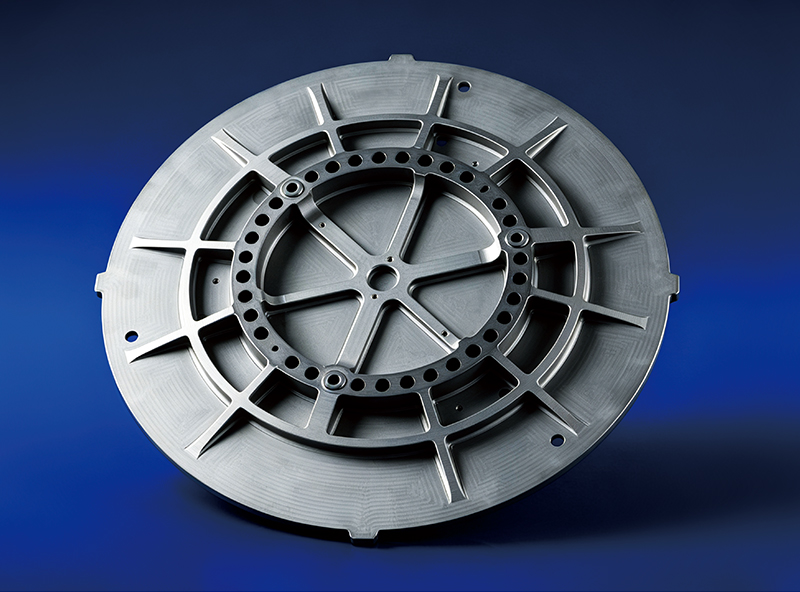
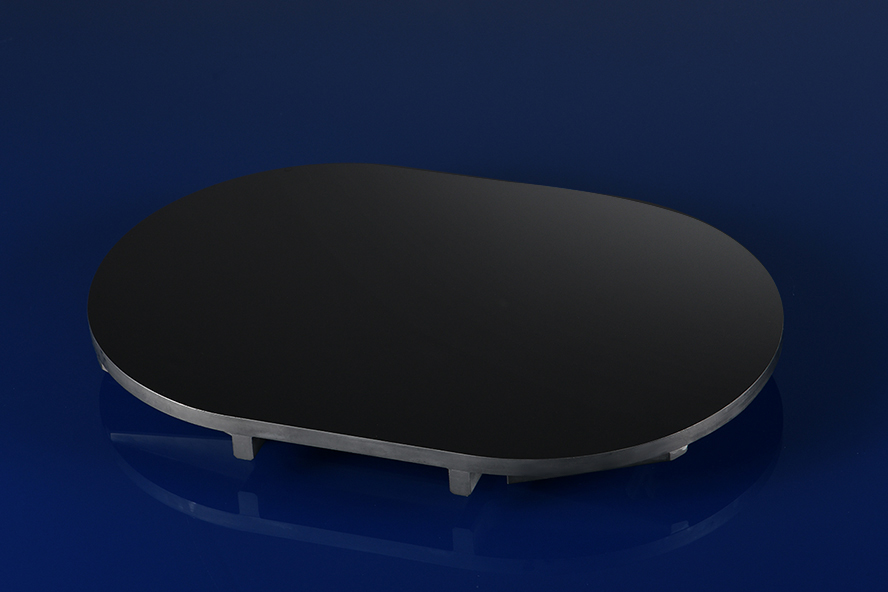
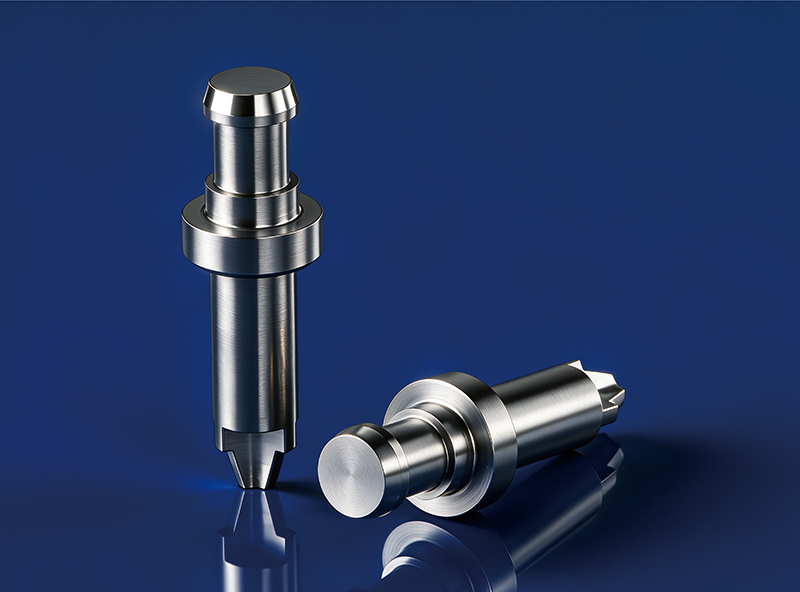
Due to its extremely high hardness, silicon carbide is very difficult to machine. Complex, high-precision geometries require specialized diamond tools and advanced machining technologies.We are capable of machining complex features such as deep holes, thin walls, grooves, and curved surfaces. Surface roughness can reach Ra 0.005 μm (mirror finish), meeting the strict requirements of semiconductor equipment, mechanical seals, vacuum systems, and optical components.
The table below lists the key performance parameters of our silicon carbide ceramic materials, demonstrating their excellent mechanical, thermal, and chemical stability. The data is based on internal testing and batch statistics and is for design reference only.
| Property | Unit | Silicon Carbide |
|---|---|---|
| Density | g/cm³ | 3.15 |
| Vickers Hardness | Hv0.5 | 2650 |
| Bending Strength | MPa | 450 |
| Compressive Strength | MPa | 2650 |
| Elastic Modulus | GPa | 430 |
| Toughness | MPa·m1/2 | 4 |
| Poisson's Ratio | — | 0.14 |
| Young's Modulus | GPa | 430 |
| Purity of Silicon Carbide | % | 99 |
| Property | Unit | Silicon Carbide |
|---|---|---|
| Thermal Conductivity @ 25°C | W/mK | 110 |
| Melting Point | °C | 2800 |
| Specific Heat Capacity | J/gK | 0.8 |
| Linear Expansion Coefficient | 10⁻⁶/K | 4 |
| Property | Unit | Silicon Carbide |
|---|---|---|
| Dielectric Constant (1 MHz) | — | 10 |
| Breakdown Voltage | V/cm | 1x10⁶ |
| Dielectric Loss (1 MHz) | — | 0.001 |
| Resistivity | Ω·cm | 10⁷-10⁹ |
Reaction-bonded silicon carbide (RB-SiC) is produced by infiltrating molten silicon into a porous carbon/SiC preform. In this process, silicon reacts with carbon to generate additional SiC, but free silicon remains in the structure.
In contrast, pressureless sintered silicon carbide (SSiC) is produced by high-temperature sintering of fine SiC powder without the addition of free silicon, resulting in a nearly completely dense and pure SiC structure.
Due to this fundamental difference, RB-SiC and SSiC exhibit drastically different performance characteristics. RB-SiC is easier to process into complex shapes and large sizes, is less expensive, and has good thermal conductivity, but due to the presence of free silicon, it has lower hardness, poorer high-temperature resistance, and limited corrosion resistance.
On the other hand, silicon carbide (SSiC) has higher hardness, superior wear resistance, excellent chemical stability, and better high-temperature performance, making it more suitable for harsh conditions such as semiconductor devices, high-temperature systems, and corrosive environments. However, it is more difficult to process and is generally more expensive.
In practical applications, RB-SiC is typically used for large structural components and cost-sensitive projects, while SSiC is more popular when maximum performance, durability, and chemical resistance are required.

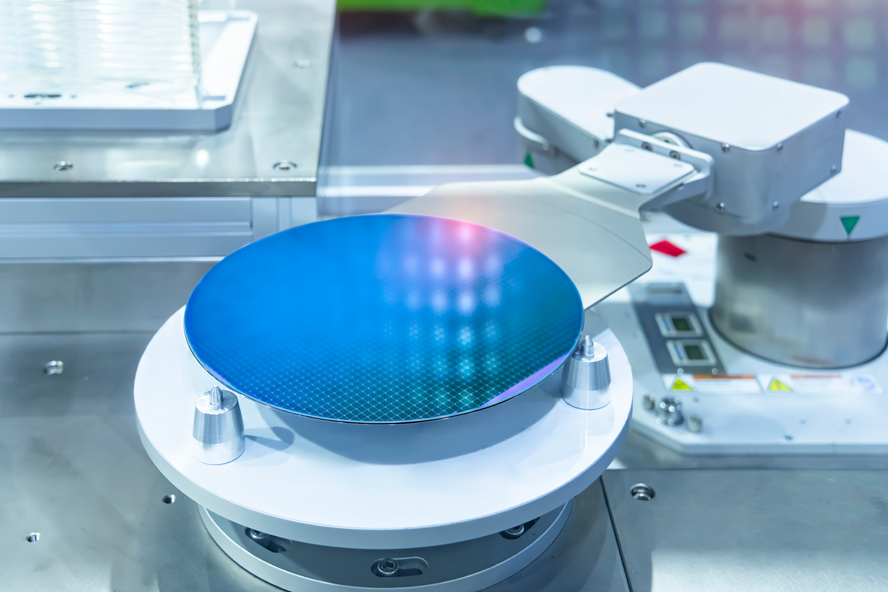
It possesses high thermal conductivity, enabling efficient heat dissipation and helping to maintain temperature uniformity during processes such as etching and deposition. Simultaneously, SiC maintains excellent dimensional stability at high temperatures, reducing deformation and ensuring process accuracy.
Furthermore, silicon carbide exhibits excellent resistance to plasma, corrosive gases, and strong corrosive chemicals, making it ideal for components used in harsh semiconductor processing environments. Its high hardness and abrasion resistance also contribute to extended lifespan and reduced particle generation, which is crucial for contamination control.
These properties make silicon carbide the material of choice for critical semiconductor components such as etching rings, wafer chucks, substrates, and structural components, where performance, stability, and cleanliness are paramount.
Macor is a machinable glass-ceramic made from fluorophlogopite mica crystals embedded in a borosilicate glass matrix. This composition gives it a rare
combination of metal-like machinability, excellent electrical insulation, low thermal conductivity, and stability up to 1000°C (no load) while maintaining very tight tolerances.
English
German
Japanese
Spanish
Room 306, Gate B, Unit 1, Block 2 South, No. 1 Yile Road, Songshan Lake, Dongguan City, Guangdong Province, China(523808)