NewsUncategorized
Finding the right ceramic machining company is not the same as finding a ceramic material supplier.
Technical ceramics such as alumina, aluminum nitride (AlN), silicon carbide (SiC), silicon nitride (Si₃N₄), zirconia, Macor, and boron nitride (BN) are difficult to machine because they are hard, brittle, and sensitive to chipping, cracking, and surface damage.
For engineers and procurement teams, the important questions are therefore not simply “Who sells ceramic?” but:
This guide compares nine ceramic machining companies and explains what to look for when selecting a precision ceramic machining supplier.
A capable ceramic machining company should combine material knowledge, precision machining, grinding, surface finishing, inspection, and engineering experience.
The most important factors include:
The best supplier depends on your material, geometry, required precision, volume, and application.
| Company | Key Materials | Main Strength |
|---|---|---|
| Jundro | Alumina, AlN, SiC, Si₃N₄, zirconia, Macor, Shapal, BN, glass & glass-ceramics | Precision machining of hard-brittle materials |
| CoorsTek | Alumina, AlN, SiC, Si₃N₄, quartz, sapphire, others | Semiconductor and advanced ceramics |
| Kyocera | Alumina, SiC, sapphire, AlN and others | Integrated ceramic materials and components |
| CeramTec | Alumina, AlN, SiSiC, Si₃N₄ and others | Large-scale technical ceramics expertise |
| Morgan Advanced Materials | Technical ceramics, MACOR and others | Industrial, semiconductor and aerospace applications |
| Astro Met | Alumina, zirconia, ZTA, Macor | Precision ceramic machining |
| Precision Ceramics | Macor, Shapal, alumina, zirconia, nitrides and others | Prototyping and engineered ceramics |
| Ortech Ceramics | Alumina, zirconia, SiC, Si₃N₄, Macor | Custom technical ceramics |
| Xycarb | Advanced ceramic materials | Semiconductor applications |
The companies above have different business models. Some are large integrated ceramic manufacturers, while others focus more specifically on custom machining and engineered components.
Jundro is a precision machining manufacturer specializing in hard-brittle materials, including advanced ceramics, glass, and glass-ceramics.
Rather than focusing only on material production, Jundro's business is centered on machining finished precision components from difficult materials.
Its material range includes:
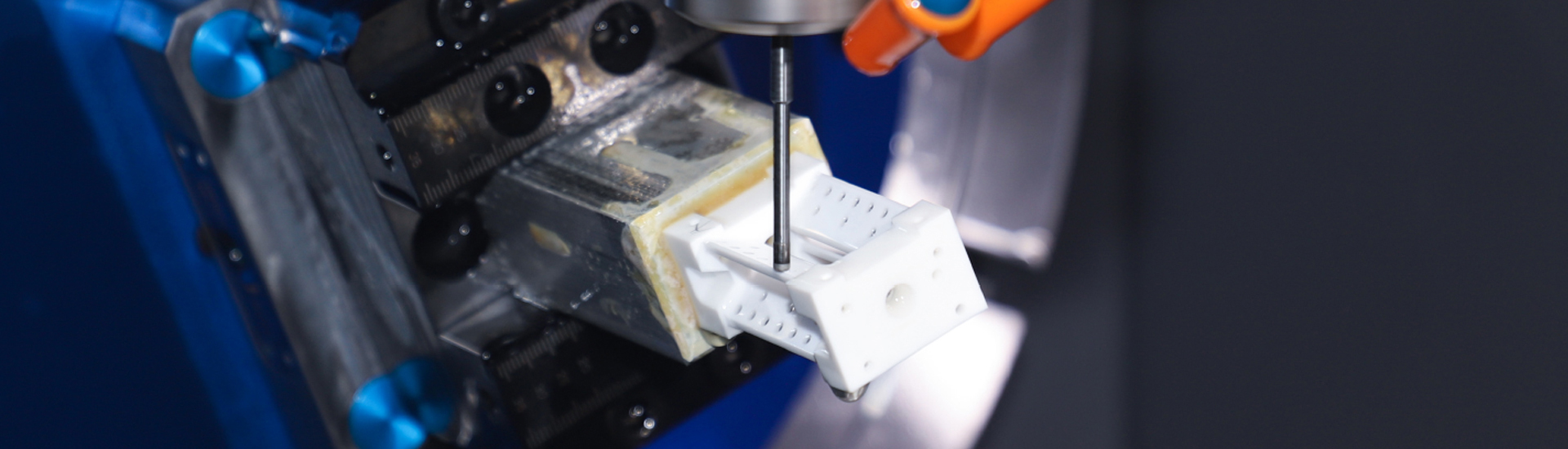
Jundro provides 3-axis, 4-axis, and 5-axis CNC machining together with grinding, polishing, lapping, drilling, tapping, ultrasonic cleaning, and laser marking.
For selected ceramic applications, published machining capabilities include ±1 μm dimensional tolerance and 1 μm flatness, depending on material, geometry, size, and process.
The company also uses CMM, laser interferometry, white-light interferometry, roughness measurement, and other inspection equipment for precision components.
Jundro is particularly suitable for customers looking for:
One of Jundro's key advantages is its experience machining materials that require very different cutting, grinding, and finishing strategies.
CoorsTek is one of the major technical ceramics manufacturers serving demanding industrial and semiconductor applications.
Its semiconductor materials and components include alumina, aluminum nitride, silicon carbide, silicon nitride, quartz, graphite, silicon, and yttria.
The company provides ceramic components for processes including:
CoorsTek is a strong option for large-scale semiconductor programs and customers looking for an integrated advanced ceramics manufacturer.
Kyocera has extensive experience in fine ceramics and semiconductor processing components.
Its technical ceramic portfolio includes materials such as alumina, silicon carbide, aluminum nitride, and sapphire.
Applications include:
Kyocera's strength is its combination of ceramic material technology, component design, manufacturing, and measurement.
CeramTec is a major technical ceramics manufacturer with experience across semiconductor, industrial, medical, automotive, and other applications.
Its technical ceramics include alumina, aluminum nitride, silicon nitride, and silicon carbide-based materials.
The company combines material development, manufacturing, machining, and application engineering.
For customers requiring established large-scale production capabilities and extensive technical ceramics experience, CeramTec is an important supplier to consider.
Morgan Advanced Materials provides engineered materials and technical ceramic components for industries including semiconductor, aerospace, healthcare, and industrial manufacturing.
Its portfolio includes structural ceramics and specialty materials such as MACOR.
The company is particularly relevant for customers looking for a larger international supplier with capabilities across multiple industrial sectors.
Astro Met specializes in advanced ceramic components and precision ceramic machining.
Its materials include:
Its machining capabilities include grinding, diamond core drilling, surface and form grinding, lapping, and polishing.
Astro Met is particularly relevant for customers looking for precision ceramic components and prototype-to-production manufacturing.
Precision Ceramics focuses on advanced technical ceramics and engineered ceramic components.
Its material portfolio includes Macor, Shapal, alumina, zirconia, carbides, and nitrides.
The company provides material selection and machining services, including prototype and production work.
It is especially relevant when the project requires help selecting an appropriate technical ceramic before machining.
Ortech Ceramics manufactures custom technical ceramic components using materials including:
Its capabilities include ceramic machining and grinding, as well as specialized ceramic manufacturing and metallization.
The company serves applications including semiconductor equipment, industrial components, and ceramic-to-metal assemblies.
Xycarb is associated with advanced ceramic components for semiconductor processing applications.
Its focus is particularly relevant to customers in semiconductor manufacturing who require ceramic components designed for demanding process environments.
For semiconductor projects, Xycarb can be considered alongside larger suppliers such as CoorsTek, Kyocera, and CeramTec.
Not all technical ceramics behave the same way during machining.
| Material | Hardness | Machining Difficulty | Typical Challenge |
|---|---|---|---|
| Alumina | High | High | Chipping, surface damage |
| AlN | High | High | Brittle edges, complex structures |
| SiC | Very high | Very high | Tool wear, grinding efficiency |
| Si₃N₄ | High | Very high | Tool wear, chipping, dense microstructure |
| Zirconia | High | High | Fracture control, surface damage |
| Macor | Lower | Relatively easy | Dimensional and surface control |
| BN | Relatively soft | Relatively easy | Edge damage and surface quality |
In practical machining, geometry can be just as important as material hardness.
A simple flat plate may be relatively straightforward. A component containing small holes, thin walls, deep grooves, internal threads, and inclined surfaces can be much more difficult.
For example, silicon nitride combines high hardness, a dense microstructure, and relatively high fracture toughness. Small holes and thin sections can therefore create significant tool wear and edge-chipping challenges.
This is why a supplier's actual machining experience can be more useful than a simple material hardness chart.
Ceramic components can be manufactured using different process routes.
Green machining is performed before final sintering, when the material is easier to cut.
Hard machining is performed after sintering. It is generally more demanding because the ceramic has reached its final hardness.
For precision finished components, hard machining may involve diamond tools, grinding, lapping, and polishing.
The correct process depends on the material, component geometry, dimensional requirements, production volume, and required surface quality.
When evaluating a ceramic machining company, ask which process route it actually uses for your material and whether it can maintain the required dimensions after finishing.
There is no single tolerance that applies to every ceramic component.
Achievable precision depends on:
For example, Jundro publishes precision capabilities for selected materials that can reach ±1 μm tolerance and 1 μm flatness, depending on the component.
Other examples include small holes, internal threads, thin walls, slots, and precision ground surfaces.
The important point is to evaluate the supplier using actual examples and inspection data, rather than a general statement such as “high precision.”
Machining precision is only useful if it can be measured.
A capable ceramic machining company may use several inspection methods depending on the component.
Coordinate measuring machines are used for dimensional inspection, position, profile, flatness, and geometric tolerances.
Laser interferometers can be used for highly precise flatness and surface measurements, especially for optical and metrology-related components.
White-light interferometry is useful for measuring surface topography and very fine surface characteristics.
Projectors and optical measurement systems can inspect small features, profiles, holes, and complex geometries.
Surface roughness equipment verifies the final surface condition after machining, grinding, or polishing.
A supplier should be able to provide an inspection report appropriate to the drawing requirements rather than simply stating that the parts were “QC checked.”
Semiconductor equipment is one of the most demanding applications for technical ceramics.
Typical components include:
Materials such as alumina, AlN, SiC, Si₃N₄, and quartz are commonly selected for their electrical, thermal, chemical, and wear properties.
Ceramics are widely used where electrical insulation, dimensional stability, low outgassing, and high-temperature performance are required.
Ceramic components can provide high-temperature resistance, low density, electrical insulation, and dimensional stability in demanding aerospace environments.
Low-expansion glass-ceramics and precision ceramics can be used for optical mounts, reference structures, mirror components, and precision positioning systems.
Technical ceramics such as alumina and zirconia are used in medical and laboratory applications because of their wear resistance, chemical stability, and biocompatibility in suitable grades.
These terms are often used interchangeably, but they can represent very different capabilities.
Usually focuses on selling raw materials, blanks, tubes, plates, or standard ceramic products.
May produce ceramic materials and components, sometimes using molding, pressing, sintering, or injection molding.
Focuses on transforming ceramic blanks or sintered materials into finished precision components through machining, grinding, polishing, and related processes.
For a custom component with a detailed engineering drawing, the third category may be the most relevant.
A company can also combine several of these roles, so it is important to understand what processes are actually performed in-house.
Before sending an RFQ, evaluate the supplier using these questions:
Do not assume that a company machining alumina can automatically handle SiC, Si₃N₄, AlN, Macor, or specialty glass.
Ask for examples of similar tolerances, hole sizes, flatness, surface roughness, or geometric tolerances.
Small holes, thin walls, deep grooves, internal threads, inclined surfaces, and complex 3D structures can significantly change the manufacturing difficulty.
Ask how critical dimensions will be measured and whether inspection reports can be supplied.
A real machining case is often more useful than a long list of claimed capabilities.
Prototype machining and repeat production require different process planning and cost structures.
Ceramic machining is usually more expensive than conventional metal CNC machining because the material is difficult to cut and often requires specialized diamond tooling, grinding, polishing, and inspection.
The main cost factors are:
A simple alumina component may have a very different cost from a complex SiC or Si₃N₄ component with micron-level tolerances.
For this reason, the drawing and 3D model are usually more useful for quotation than a simple description such as “ceramic part.”
A ceramic machining company produces finished components from technical ceramics using processes such as CNC machining, drilling, grinding, lapping, polishing, and related precision processes.
There is no universal best supplier. The right company depends on the material, geometry, tolerance, quantity, application, and required inspection.
Companies such as CoorsTek, Kyocera, CeramTec, Morgan Advanced Materials, and specialized precision machining companies such as Jundro serve semiconductor-related applications. The best choice depends on the specific component and qualification requirements.
Yes. Technical ceramics can be CNC machined, but the process is different from conventional metal machining. Depending on the material and condition, diamond tooling, grinding, or other specialized processes may be required.
Machining difficulty depends on both material and geometry. SiC and Si₃N₄ can be particularly demanding because of their hardness, fracture behavior, microstructure, and tool wear.
Yes, selected ceramic components can be machined to micron-level tolerances. However, achievable accuracy depends heavily on material, size, geometry, process, and inspection method.
Yes, but small holes can be one of the most difficult features in ceramic machining. Hole diameter, depth, material, aspect ratio, and required surface quality all affect manufacturability.
Yes, but thin ceramic walls require careful process control because excessive machining forces can cause chipping or cracking.
Generally, yes. Ceramic machining often requires specialized tooling, slower material removal, grinding, polishing, and additional inspection.
A 2D engineering drawing and 3D STEP model are ideal. The drawing should identify material, tolerances, surface finish, and other critical requirements.
Choosing a ceramic machining company should be based on more than material availability or a low quotation.
The most important factors are material expertise, machining capability, achievable precision, inspection capability, engineering experience, and experience with similar components.
For straightforward ceramic parts, many suppliers may be capable. For complex components requiring micron-level tolerances, small holes, thin walls, precision grinding, or demanding surface finishes, the supplier's actual machining experience becomes much more important.
If you are comparing suppliers, start with your material, drawing, tolerance, quantity, and application. These five pieces of information usually provide a much better basis for evaluating whether a ceramic machining company is suitable for your project.
If you need a custom ceramic component, Jundro can review your drawing and recommend a suitable machining process and material based on the required performance.

Chinese (Simplified)

English

German

Japanese

Spanish
Floors 1-2, Building 3, Qianyuan Industrial Park, No. 2 Gaoxin 2nd Road, Dalang Town, Dongguan, Guangdong, China(523770)