NewsUncategorized
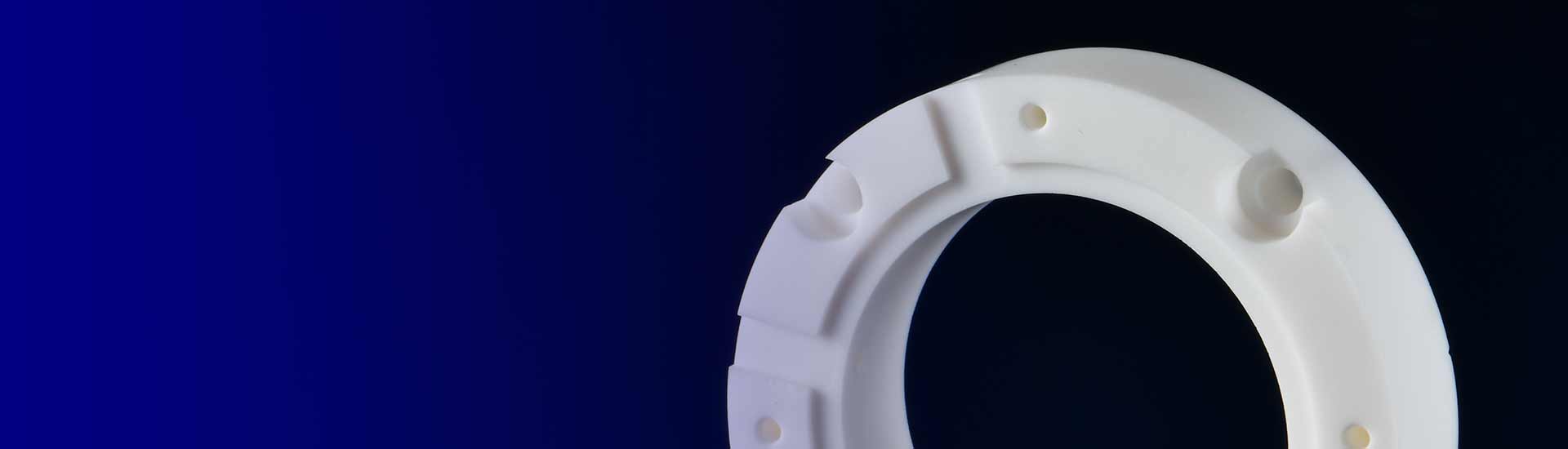
In cutting-edge scientific research, semiconductors, and the medical industry, material selection directly impacts component performance, dimensional stability, and processing complexity. Common advanced ceramics possess excellent hardness and heat/corrosion resistance, but their hardness and brittleness often make machining complex structures extremely difficult. Metallic materials, on the other hand, may not meet requirements for electrical insulation or thermal stability. Macor machinable glass ceramic offers an ideal solution. Developed by Corning Incorporated, this material possesses the properties of a conventional metalworking tool and can be machined using conventional metalworking tools.
This characteristic makes it particularly suitable for manufacturing precision components with complex geometries, microholes, grooves, threads, and other fine features.
This guide explores Macor’s material properties, machining characteristics, typical applications, and key considerations when selecting a precision Macor machining supplier.
Macor is a machinable glass ceramic developed by Corning. It is composed of a glass matrix containing uniformly distributed fluorophlogopite mica crystals.
Its unique microstructure allows material to be removed through controlled machining, making it possible to produce complex shapes and precision features without conventional ceramic sintering and grinding processes at the component-manufacturing stage.
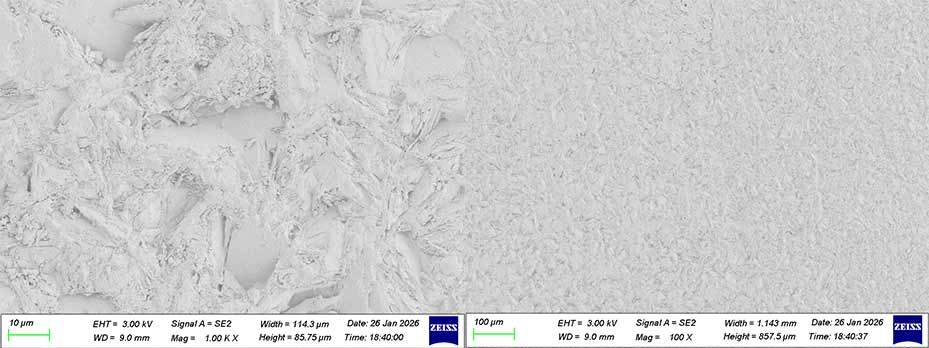
SEM microstructure of Macor glass ceramic, showing mica crystals distributed within the glass matrix.
| Advantage | Explanation | Typical Applications |
|---|---|---|
| Electrical insulation | Excellent electrical insulation compared with metals. | Electrical insulators, semiconductor components |
| Low thermal conductivity | Transfers heat more slowly than metals. | Thermal isolation components, furnace fixtures |
| Low thermal expansion | Maintains dimensional stability during temperature changes. | Precision instruments, optical supports |
| Good dimensional stability | Maintains stable dimensions under varying environmental conditions. | Precision fixtures, measuring equipment |
| Non-porous structure | Dense structure with low permeability | Vacuum components, laboratory equipment |
| Good machinability | Easier to machine than conventional ceramics such as alumina and SiC. | Complex precision parts, threaded components, micro-hole structures |
| Vacuum compatibility | Suitable for vacuum environments with proper cleaning and preparation | Vacuum equipment, semiconductor equipment |
These characteristics make Macor a practical material for applications where electrical insulation, thermal stability, and complex machined geometries are required.
Macor’s unique machinability sets it apart from other engineering ceramics; compared to many other materials, it enables the achievement of high-precision tolerances and complex geometries with greater ease.
Its machinability allows manufacturers to use a combination of conventional CNC machining, drilling, milling, and precision finishing processes. However, achieving consistent dimensional accuracy and surface quality still requires appropriate equipment and machining experience.(Check out the processing guide we’ve shared)
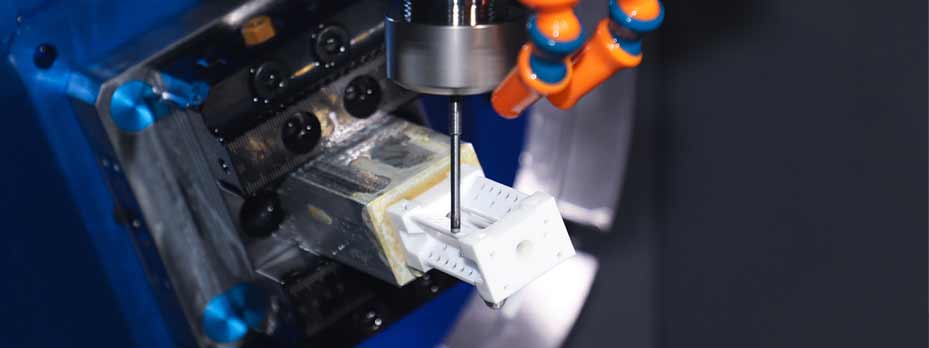
Macor is typically supplied in the form of blocks, plates, rods, or other standard shapes.Before machining, the material must be inspected for surface defects and to ensure sufficient machining allowance, in accordance with the requirements specified in the drawings.
This step is an essential part of our processing for all ceramic materials.Since the raw materials we select rarely match the exact dimensions specified in the blueprints, we use grinding to bring them to a size suitable for further machining. Additionally, we employ grinding processes to control and ensure the required flatness and parallelism.
Achieving the complex shapes specified in the technical drawings relies heavily on CNC machining. Features such as intricate geometries, grooves, steps, and both through-holes and blind holes must be produced using CNC processes. While Macor is easier to machine than many other ceramic materials, selecting the appropriate cutting tools and machining parameters remains essential—a factor that is critical to both production efficiency and overall costs.
Regarding inspection, we conduct checks across multiple stages to ensure full compliance with drawing specifications.
This includes in-process inspection during machining, as well as a comprehensive final inspection after the parts are removed from the machine.
Key parameters verified include dimensions, flatness and parallelism, hole positions and diameters, and surface roughness.
For complex components, we also perform verification using a coordinate measuring machine (CMM).
Following machining and inspection, components should be cleaned to remove machining debris, dust, and residual contaminants.
For applications requiring higher levels of cleanliness, cleaning and packaging should be performed within a dust-free environment—specifically, a cleanroom.
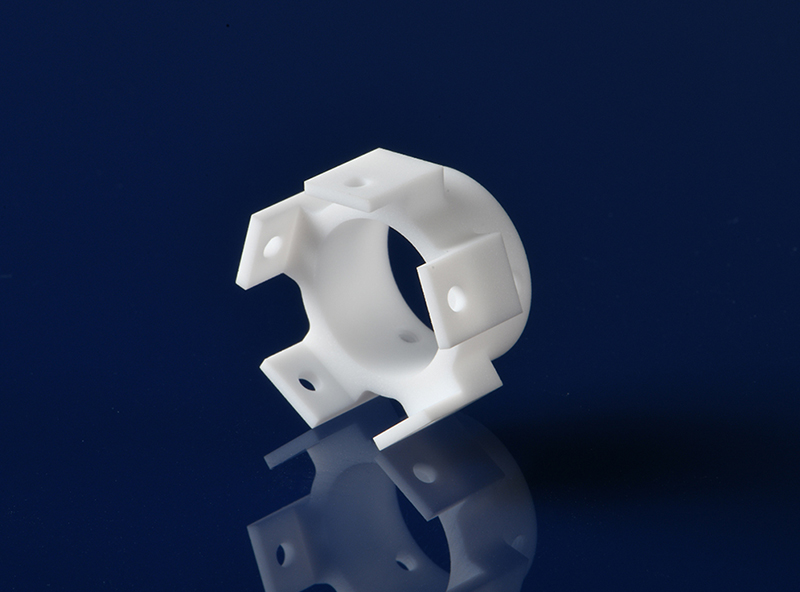
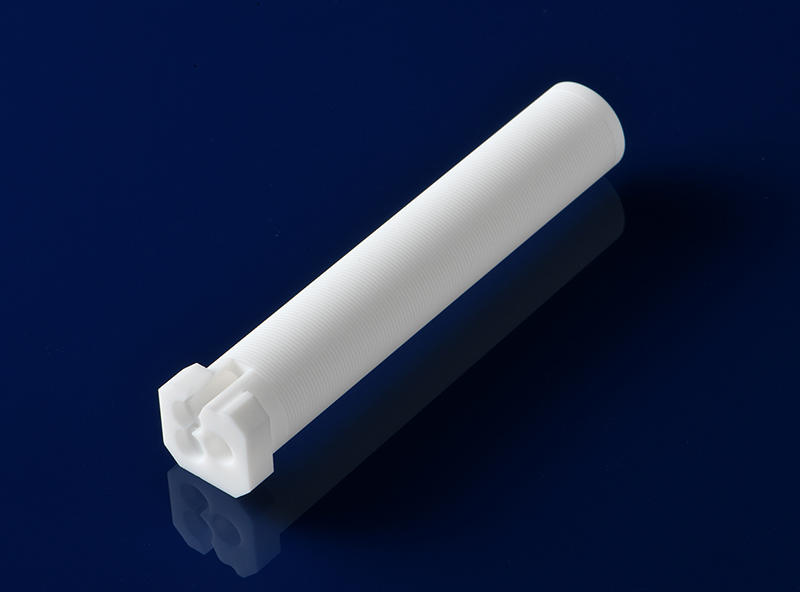
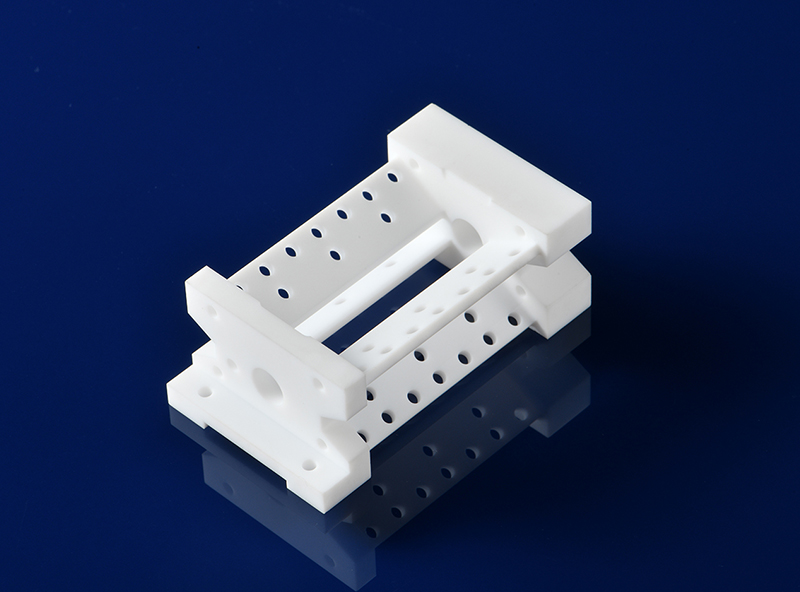
Macor is relatively easy to machine compared with many conventional technical ceramics. However, this does not mean every machining supplier can produce high-quality precision components.
For custom Macor parts, the differences between suppliers are often reflected in machining experience, dimensional control, inspection methods, and the ability to handle complex structures.
The following four dimensions can help evaluate a suitable manufacturing partner.
Industry consideration:
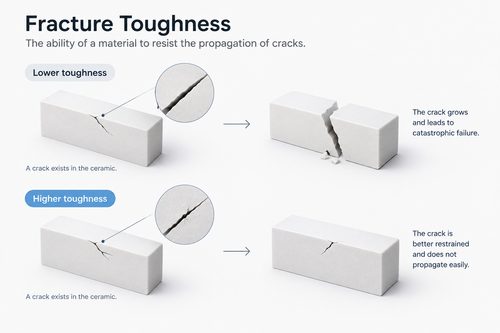
Although Macor is machinable using conventional tools, it is still a brittle glass ceramic.Improper cutting parameters, excessive machining forces, or unsuitable tool geometry can cause edge chipping, cracks, and surface defects.
Jundro’s Capability:
Jundro specializes in precision machining of hard and brittle materials, including Macor machinable glass ceramic. Our experience covers complex structures, precision holes, slots, and other functional features, with a focus on minimizing edge chipping, cracks, and surface defects.
Industry consideration:
Macor’s machinability makes complex structures possible, but achieving tight dimensional tolerances still depends on machine accuracy, workholding, machining strategy, and finishing processes.
Parts involving small holes, thin walls, deep pockets, and multiple reference surfaces require more careful process planning.
Jundro’s capability:
Jundro operates 3-axis, 4-axis, and 5-axis CNC machining centers, complemented by precision grinding and polishing equipment. The company possesses extensive experience in machining parts with complex structures—for instance, producing high-precision ion trap mounts for the University of California and the National University of Singapore.
Industry considerations:
For many high-precision devices and scientific research projects, standard-specification Macor may not meet the requirements.
Since small-batch customization often involves complex shapes, specific features, and stringent precision requirements, suppliers must possess the capability to evaluate technical drawings and assess the feasibility of machining.
Jundro’s capability:
This is precisely where Jundro excels. Guided by our vision of bringing hard and brittle material components into every precision-driven moment of technological advancement, we specialize in high-precision, small-batch custom manufacturing. With a focus on complex structures, demanding tolerances, and specialized machining requirements, we combine precision machining capabilities with engineering expertise to transform challenging designs into reliable, high-quality components rather than pursuing mass production.
Industry consideration:
For precision equipment, dimensional deviations and surface defects can affect component assembly and equipment performance.
Machining quality should therefore be verified rather than assumed based on manufacturing experience alone.
Jundro’s Capability:
Jundro uses professional inspection equipment, including CMMs, laser interferometers, white-light interferometers, 2D optical projectors, and surface roughness testers, to verify dimensional accuracy, geometric tolerances, and surface quality. We also provide ultrasonic cleaning, protective packaging, and quality documentation under ISO 9001, ISO 14001, and ISO 13485 management systems.
Macor is an excellent choice for precision components requiring electrical insulation, thermal stability, and complex geometries.
Jundro provides custom Macor machining services, including CNC milling, drilling, precision grinding, and dimensional inspection. We manufacture precision components based on customer drawings, from prototypes to small-batch production.
Contact Jundro for your custom Macor machining requirements.
Macor is significantly easier to machine than conventional technical ceramics such as alumina and silicon carbide.However, because it is still a brittle material, proper cutting parameters and machining techniques are necessary to prevent chipping and surface damage.
Yes. Macor can be processed using CNC milling, drilling, and turning operations.
Achievable tolerances depend on component dimensions, geometry, machining processes, and inspection requirements. [Click here to view Jundro’s machining tolerances.]
Yes. Macor is a non-porous glass ceramic and is used in various vacuum-related applications.
The difference lies in the materials’ properties and processing characteristics: Macor offers excellent machinability, making it easy to produce parts with complex geometries, whereas aluminum oxide (alumina) possesses superior mechanical and thermal properties but requires specialized tooling for machining. The choice of material ultimately depends on the specific application requirements and your budget.
Macor has a maximum continuous operating temperature of 800°C and can withstand temperatures of up to 1,000°C under no-load conditions.
We recommend providing 2D drawings, 3D models, order quantities, tolerance requirements, and any other specific technical requirements. This will help us accurately evaluate the project and provide a more precise quotation and lead time.

Chinese (Simplified)

English

German

Japanese

Spanish
Floors 1-2, Building 3, Qianyuan Industrial Park, No. 2 Gaoxin 2nd Road, Dalang Town, Dongguan, Guangdong, China(523770)