
NewsQuality & Process
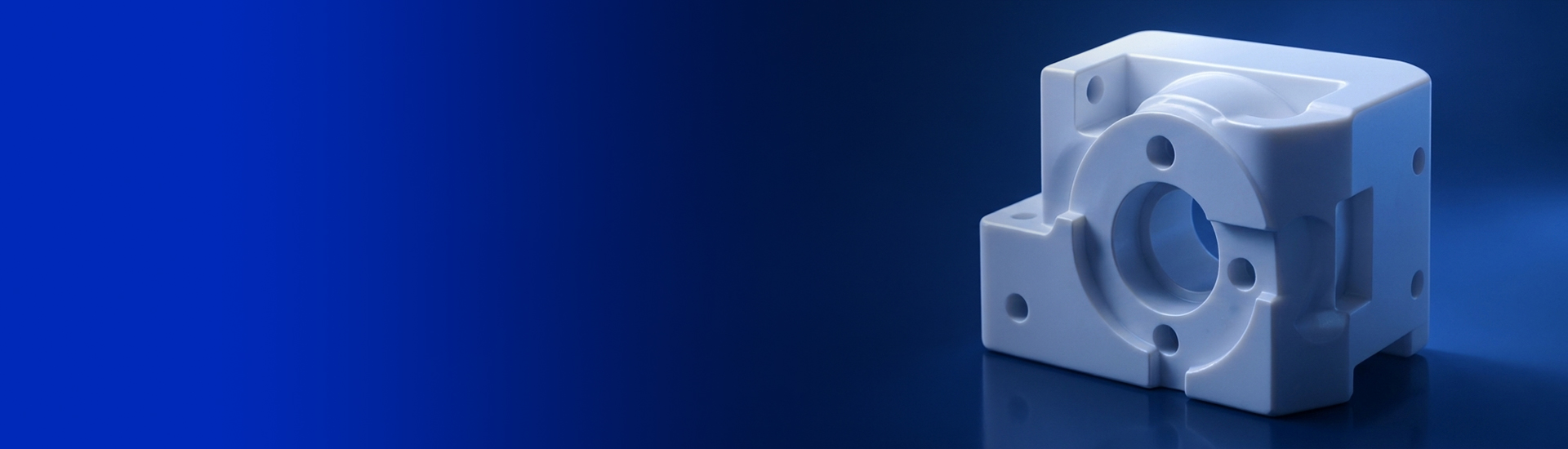
In most instances, when the subject of zirconia arises, the first question many engineers ask is: "What distinguishes it from Macor?"
While both materials possess exceptional properties—and are indeed utilized within the field of precision engineering—they exhibit significant differences in terms of performance, machinability, cost, and specific application nuances. This guide provides a practical comparative analysis designed to assist you in making the optimal material selection to meet your specific application requirements.
Zirconia possesses exceptionally high mechanical strength among engineering ceramic materials, with a strength rating in the 1300 MPa range. It exhibits the highest fracture toughness of any ceramic and demonstrates robust impact resistance, performing outstandingly in high-wear applications.
In contrast, Macor possesses significantly lower mechanical strength; however, this characteristic affords the material exceptional machinability during processing.
We conducted a simple hammer impact test to visually demonstrate this difference: Zirconia exhibited remarkable resistance to fracture, whereas Macor proved prone to chipping and spalling upon impact.
Both materials possess extremely low thermal conductivity, making them excellent choices for applications involving thermal insulation and the reduction of heat transfer.
In terms of high-temperature performance, Zirconia can withstand temperatures up to 1000°C, whereas Macor is rated for up to 800°C.
Regarding electrical insulation properties, Macor significantly outperforms Zirconia; furthermore, thanks to its low outgassing characteristics, it performs exceptionally well in vacuum and ultra-high vacuum (UHV) environments.
Below is a brief comparison of the properties of these two materials. If you wish to compare the properties of additional materials, please click here.
| Property | Zirconia | Macor |
|---|---|---|
| Hardness(GPa) | 13 | 0.25 |
| Fracture Toughness (KIC) | ~6 – 10 MPa·m¹ᐟ² | ~0.8 – 1.2 MPa·m¹ᐟ² |
| Max Service Temperature | 1000°C | 800°C |
| Volume Resistivity | 10¹² Ω·cm | 10¹⁷ Ω·cm |
Understanding application requirements is essential when choosing between these two materials.
| Zirconia | Macor |
|---|---|
| High-load structural components | Vacuum and UHV systems |
| Wear-resistant parts | Research and prototype components |
| Medical and industrial applications | Complex geometries with tight tolerances |
| Long-life mechanical systems | Semiconductor equipment |
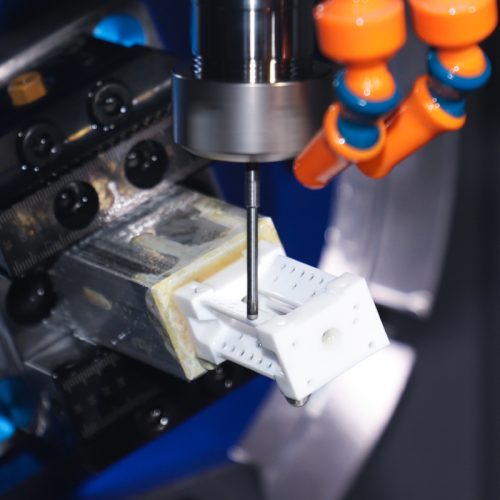
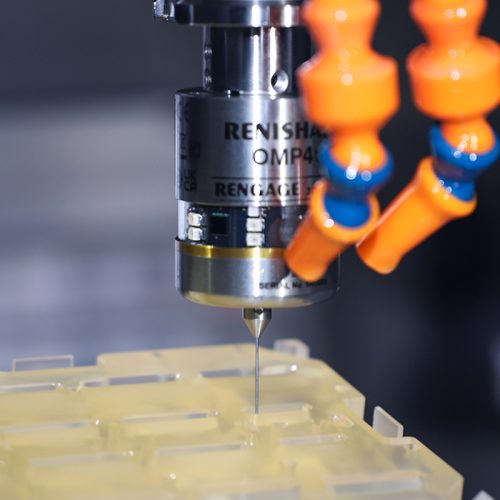
In actual machining, Macor is much easier to process compared to zirconia ceramics. This is exactly why it is known as a “machinable ceramic.” It does not require sintering after machining, offers high machining precision, and can be processed using standard metal cutting tools. It is well-suited for prototype development and small-batch production.
In contrast, zirconia ceramics are significantly more difficult to machine than Macor. Due to their high hardness, they require custom diamond tools for machining. Producing complex geometries is more costly compared to Macor. Therefore, zirconia is more suitable for mass-produced, repeatable components, such as cylindrical parts and standard geometries.
Cost is a critical factor in material selection, but it should be evaluated in terms of total manufacturing cost, not just raw material price.
Macor entails relatively high material costs but offers rapid lead times, making it well-suited for small-batch production.
In contrast, while Zirconia materials may appear to be less expensive than Macor, the inherent difficulty in machining them—coupled with the significant tool wear involved—renders them disadvantageous for the production of prototypes and small-batch parts; they prove to be a more economical choice for large-scale mass production.

Chinese (Simplified)

English
German
Japanese

Spanish
Floors 1-2, Building 3, Qianyuan Industrial Park, No. 2 Gaoxin 2nd Road, Dalang Town, Dongguan, Guangdong, China(523770)