
NewsQuality & Process
When discussing low thermal expansion glass, Schott's Zerodur and Corning's ULE glass immediately come to mind, both renowned for their near-zero coefficient of thermal expansion. So, which should you choose for your application: Zerodur or ULE? Through our multi-dimensional comparison, we hope to help you make a clearer choice of the appropriate material.
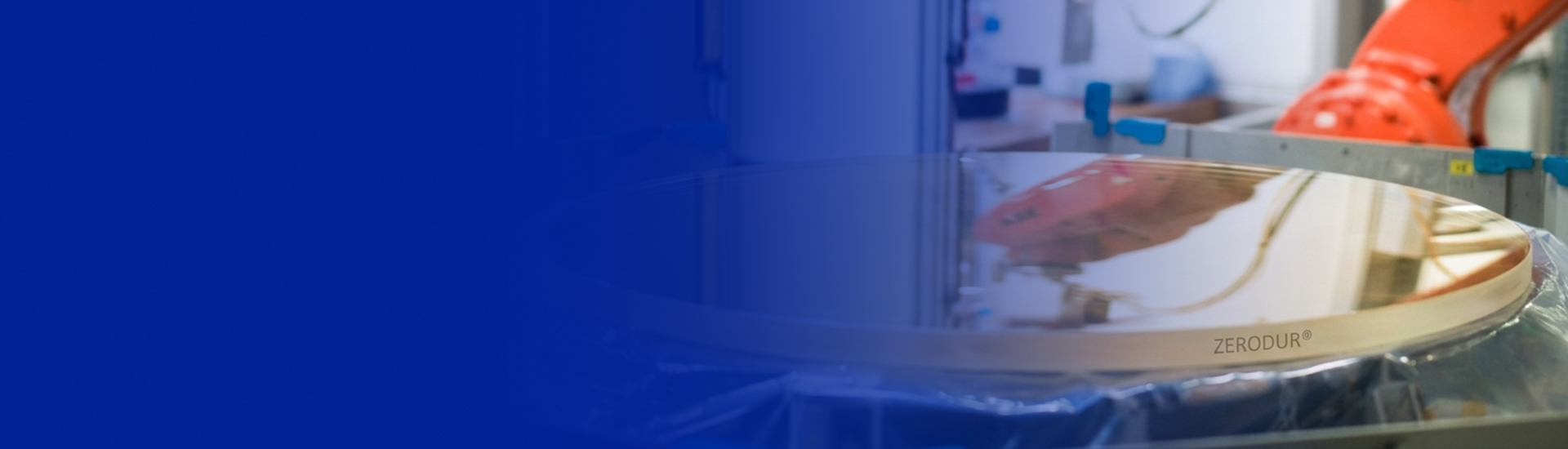
Developed by Schott AG of Germany, low-thermal-expansion glass-ceramics are available in six different thermal expansion grades. (You can click on the link to view the detailed introduction of Zerodur) They offer low CTE while possessing mechanical strength not found in ordinary glass, allowing for high-precision machining.
ULE glass, developed by Corning, has a stable coefficient of thermal expansion. It can operate at temperatures up to 800°C, exhibiting excellent temperature adaptability and preventing deformation caused by thermal expansion and contraction. (Click to view ULE details)
Zerodur exhibits a near-zero coefficient of thermal expansion (CTE) at a specific temperature range, making it ideal for applications requiring extremely high dimensional stability.
In contrast, ULE provides a more uniform and stable CTE over a broader temperature range, which is advantageous in environments with temperature fluctuations.
In semiconductor lithography systems—particularly EUV applications—Zerodur is more commonly used due to its ultra-low thermal expansion and superior long-term stability, which are critical for maintaining optical precision.(Click here to learn more about the performance comparison of materials.)
| characteristic | Zerodur | ULE Glass |
|---|---|---|
| Coefficient of Thermal Expansion (CTE) | 0 ± 0.02×10⁻⁶/K (Class 0) | 0.00 ± 0.03×10⁻⁶/°C |
| Maximum operating temperature | 600°C | 800°C |
| Thermal conductivity | 1.46 W/(m·K) | 1.31 W/(m·K) |
n terms of material density, ULE is approximately 13% lighter than Zerodur, making it more suitable for weight-sensitive applications such as space payloads.
Regarding mechanical properties, Zerodur exhibits higher bending strength, offering better tolerance during precision machining processes.
As for optical homogeneity, both materials offer excellent performance; however, ULE generally provides superior refractive index uniformity, making it more suitable for applications highly sensitive to wavefront distortion, such as laser interferometers.
| Parameter | Zerodur | ULE Glass |
|---|---|---|
| Density | 2.53g/cm³ | 2.21g/cm³ |
| Optical uniformity | 600°C | ±1 × 10⁻⁶ |
| Bending strength | ~40 MPa | ~30 MPa |
| Zerodur | ULE |
|---|---|
| Laser gyroscope mirrors | Astronomical optical mirror |
| Spectrometer optical components | Lithography machine radiation mirror |
| Wafer stepper components | Laser interferometer cavity |
| Mechanical laser resonator parts | Laser rangefinder components |
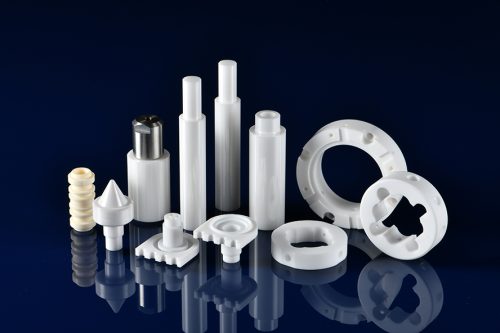
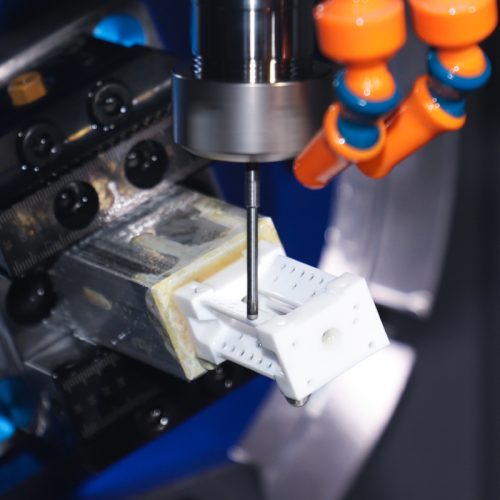
We have extensive knowledge and experience in the machining of optical glass materials, and provide customized machining of various high-precision optical glass materials, including special-shaped, round and curved surfaces, and have five-axis precision machining capabilities.
If you are selecting optical glass materials for your project, please contact our experts and we will provide strong support for your project.


Chinese (Simplified)
English
German
Japanese

Spanish
Floors 1-2, Building 3, Qianyuan Industrial Park, No. 2 Gaoxin 2nd Road, Dalang Town, Dongguan, Guangdong, China(523770)