Fused-Silica-Glass
High resistanceLow Thermal Expansion

Fused Silica Glass

Fused Silica Glass is widely used in high-tech fields such as semiconductors, optics, and scientific research due to its excellent physical and chemical properties. It is composed of amorphous materials of high-purity silicon dioxide SiO₂ (>99.9%), which does not contain other oxides and avoids impurities.

Machining Capability

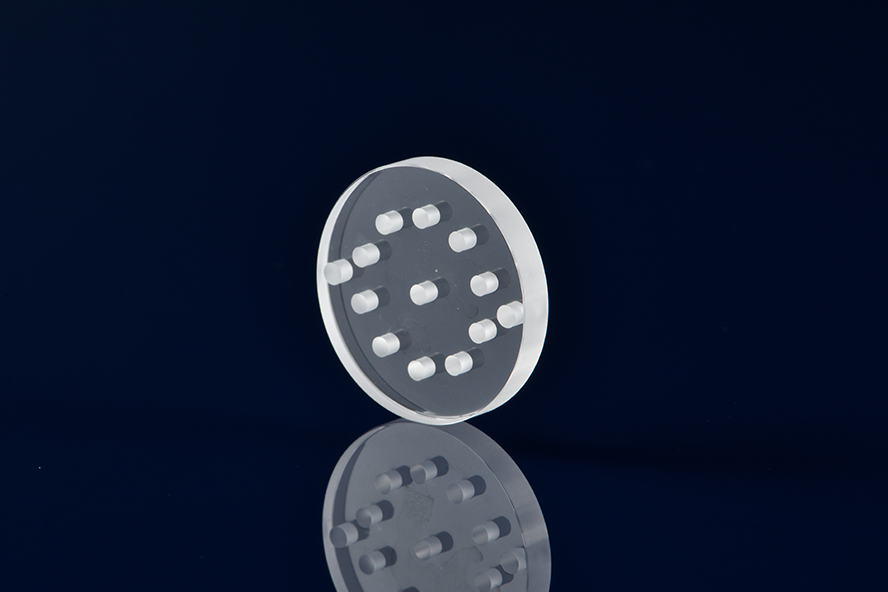
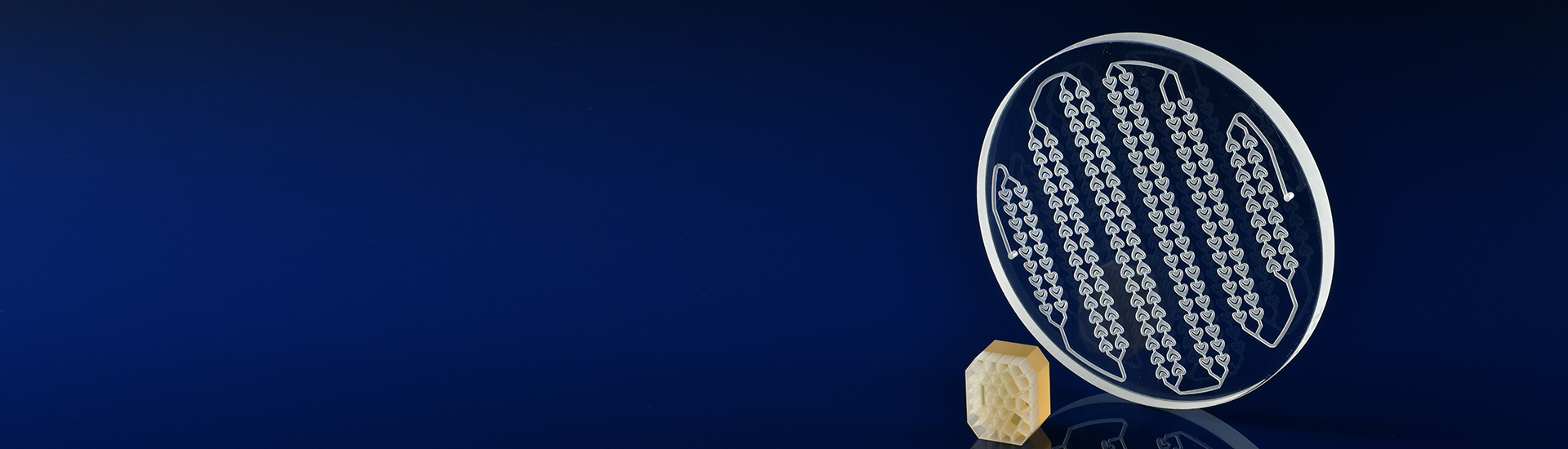
We can machine complex shapes, curved surfaces, and lightweight structures with extremely tight tolerances in Fused Silica. Surface treatments such as polishing, thin-film coating, and sandblasting/roughening are also available to meet the requirements of semiconductor and other high-precision applications.

Fused Silica Glass Machining
Tolerance ±1um
Flatness 1 µm (Ø300 mm)
Parallelism 1 µm
Roughness Ra 0.002 µm
Micropores 0.1mm
Max. Size Φ400mm

Advantages

  • High Mechanical Strength
  • High purity >99.9% SiO₂
  • Extremely Low Coefficient of Thermal Expansion
  • High Electrical Resistivity
  • Excellent Chemical Resistance
  • High Optical Transmittance

Properties

The following table lists the typical performance parameters of our standard fused silica materials. The values are derived from internal testing and statistical analysis of production batches and are provided for design reference only. Actual properties may vary slightly depending on processing conditions and batch variations.

Material Properties Unit Fused
Density g/cm³ 2.2
Bending Strength MPa 80
Compressive Strength MPa 1100
Elastic Modulus GPa 220
Poisson's Ratio 0.17
Young's Modulus GPa 72
Thermal Properties Unit Fused
Thermal Conductivity W/m·K 1.38
Melting Point °C 1730
Maximum Operating °C 1200
Linear Expansion 10⁻⁶/K 0.55
Electrical Properties Unit Fused
Dielectric Constant 1 MHz 3.75
Breakdown Voltage V/cm 400
Dielectric Loss 1 MHz <
Resistivity Ω·cm > 10¹⁸

Interested in Our Fused Silica Glass Solutions?

Fused Silica Glass Applications

Applications

  • Ultraviolet lenses, laser windows, reflector substrates
  • Infrared/ultraviolet windows, high-speed aircraft windows
  • Quartz cuvettes, laser cavity lenses
  • Optical path components for spectrometers and chromatographs
  • Microstructure devices, optical trap structures, vacuum cavity windows
  • Interferometers, gyroscope substrates
  • High-temperature gas sensor windows

Cases

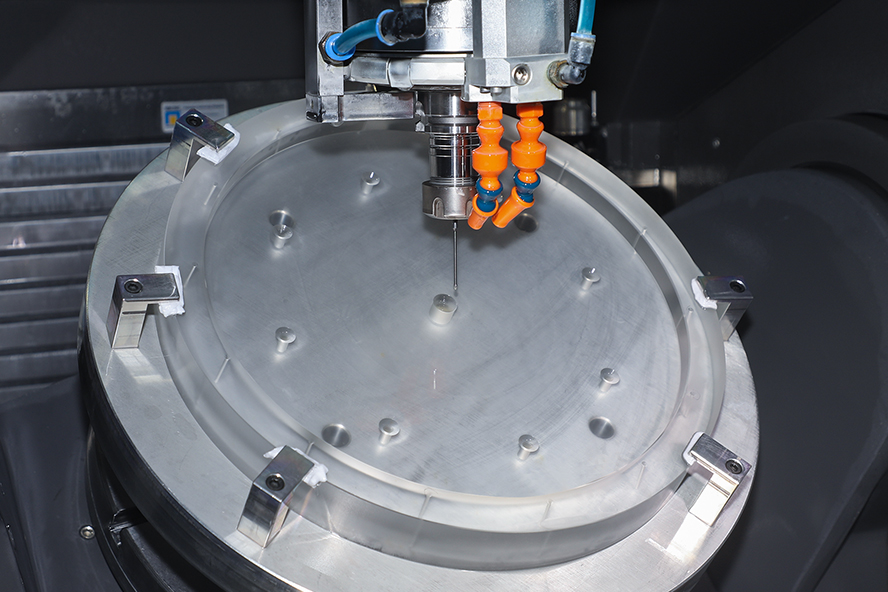
Five-axis machining of fused silica glass

FAQS

What Is JGS1 Fused Silica?

JGS1 Fused Silica is a UV-grade optical quartz material characterized by high purity, excellent UV transmittance (185–2500 nm), and superior thermal stability. It is one of the three grades defined by China’s GB/T 31447.1 standard for optical fused silica (JGS1, JGS2, JGS3).JGS1: UV-grade, best for deep-UV and precision optics.、JGS2: Standard optical grade for visible–IR.、JGS3: IR-grade, ideal for thermal or infrared applications. Click to view our full guide to JGS1 Fused Silica

Our Fused Quartz Parts Machining Service
High-Precision Capabilities:
Complex shapes: tolerances up to ±1um
Cylindrical/shaft components: tolerances up to ±1um
Surface flatness: up to 1um
Optical flatness: up to 1/20λ (depending on wavelength)
Micro-holes: diameters as small as 0.1 mm (tolerance ±0.01 mm)
Surface roughness: Ra 0.01 μm for structural parts, Ra 0.002 μm for optical components
Surface Treatment: Polishing, optical coating
How Does Fused Silica Compare with Zerodur and ULE Glass?

Fused Silica is one of the most commonly used low-CTE glass materials. Compared with Zerodur from SCHOTT and ULE Glass from Corning, fused silica has a slightly higher thermal expansion coefficient, but it offers excellent optical transmission, good thermal stability, and lower cost.

Because of this balance of performance and affordability, fused silica is widely used in optics, lasers, and semiconductor equipment.

What Is the Difference Between Fused Silica Glass and Sapphire Glass?
Both materials excel in optics and high-precision applications. Sapphire is single-crystal alumina, while fused silica is high-purity silica glass. Sapphire glass has higher hardness and stronger scratch resistance, while fused silica glass has a lower coefficient of thermal expansion than sapphire, resulting in better dimensional stability. In terms of optical performance, fused silica is superior for ultraviolet applications, while sapphire is better suited for applications requiring durability and hardness.
Do You Support Thin Film Processing for Fused Silica Glass?
Yes, we support thin film processing for Fused Silica components. In addition, we can provide several surface treatments based on customer requirements, including:Sandblasting / Surface Roughening、Precision Polishing、Thin Film Coating
These processes can help improve optical performance, surface properties, or functionality for various optical and semiconductor applications.

Macor is a machinable glass-ceramic made from fluorophlogopite mica crystals embedded in a borosilicate glass matrix. This composition gives it a rare
combination of metal-like machinability, excellent electrical insulation, low thermal conductivity, and stability up to 1000°C (no load) while maintaining very tight tolerances.