Bf33-glass
Thermal Shock ResistanceLow CTE

Borofloat® 33 Glass

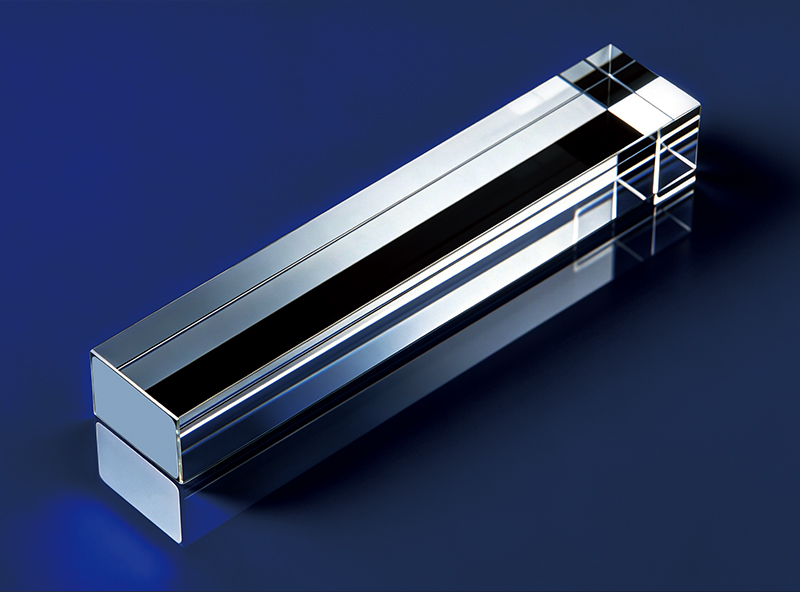
Borofloat® 33 Borosilicate Glass developed by SCHOTT is a high-performance material commonly used in high-precision optics, semiconductors and high-temperature applications. It has ultra-high chemical inertness, CTE coefficient, and ultra-low refractive index, solving problems in optics, vacuum and other fields.
Machining Capability

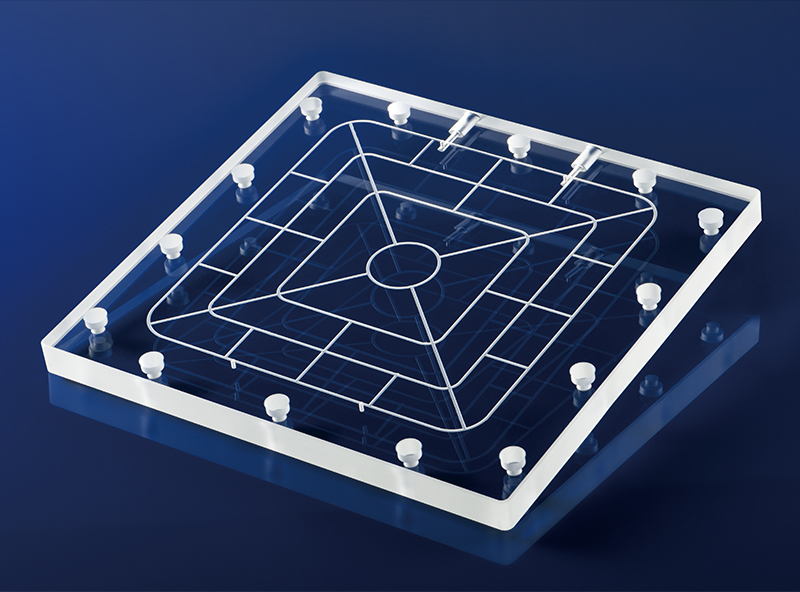
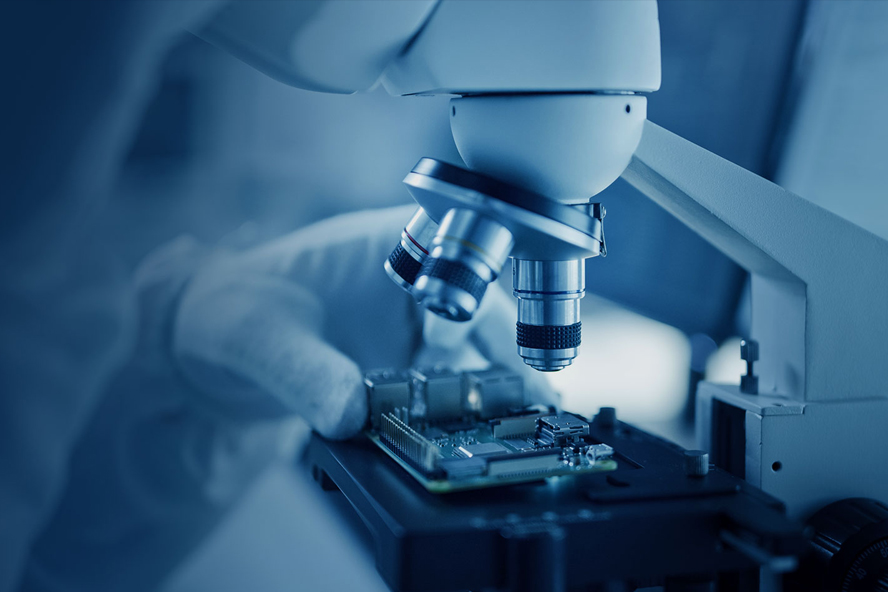
Bf33 glass is produced using the float glass process, resulting in a high degree of surface flatness. It is suitable for various processing techniques such as cutting, drilling, precision polishing, and coating. We can provide high-precision, complex processing of Bf33 glass to meet the needs of semiconductor, optics, and other demanding applications.

Macor Machining Capability
Tolerance ±1um
Flatness 1 µm (Φ300)
Roughness Ra0.01μm
Micropores 0.1mm
Internal Thread M1.2
Max. Size Φ420mm

Advantages

  • Low coefficient of thermal expansion.
  • High dimensional stability.
  • Strong resistance to thermal shock.
  • Visible light transmittance >90%.
  • Excellent corrosion resistance to chemicals.
  • Low alkali metal content.

Properties

BOROFLOAT 33 (BF33) float borosilicate glass, manufactured by SCHOTT AG, exhibits excellent thermal stability, optical properties, and chemical stability. The following table shows typical performance parameters for BF33 glass for reference only.

Mechanical Properties Unit Bf33
Density g/cm³ 2.23
Knuth Hardness HK 0.1/20 480
Young’s Modulus E 64 kN/mm²
Poisson's Ratio μ 0.20
Thermal Properties Condition Bf33
Coefficient of Linear Thermal Expansion α (20 – 300 °C) 3.25 × 10⁻⁶ K⁻¹
Specific heat capacity cp (20 – 100 °C) 0.833 kJ/(kg·K)
Thermal conductivity λ (90 °C) 1.2 W/(m·K)
Poisson's Ratio μ 0.20
Maximum Operating Unit Bf33
Short-term usage (< 10 h) °C 500
Long-term usage (≥ 10 h) °C 450
Chemical resistance Condition Bf33
Water resistance ISO 719 / DIN 12 111 HGB 1
Acid resistance ISO DIN 12 116 1
Alkali resistance ISO 695 / DIN 52 322 A 2

Interested in Our Bf33 Glass Solutions?

Macor ceramics application

Applications

  • Optical devices.
  • Laser windows.
  • Optical filters.
  • Wafer carriers.
  • Vacuum chamber observation windows.
  • Plasma equipment shielding plates.
  • MEMS pressure sensor substrates.
  • High temperature test equipment.

Learn how to use five-axis machining to create complex shapes

FAQS

How does BF33 compare to fused silica?
BF33 has a higher coefficient of thermal expansion than fused silica, meaning it is less stable under extreme temperature changes. However, it is more affordable and easier to process, making it suitable for many industrial applications.
What is the maximum operating temperature of BF33 glass?
BF33 typically has a maximum continuous operating temperature around 450–500°C, with higher short-term tolerance depending on conditions.
Do you provide custom Borofloat® 33 components?
Yes, we offer precision machining and fabrication of Borofloat® 33 glass, including complex geometries, tight tolerances, and application-specific surface treatments for industrial and optical uses.

Macor is a machinable glass-ceramic made from fluorophlogopite mica crystals embedded in a borosilicate glass matrix. This composition gives it a rare
combination of metal-like machinability, excellent electrical insulation, low thermal conductivity, and stability up to 1000°C (no load) while maintaining very tight tolerances.