UHV CompatibleEasy Machining

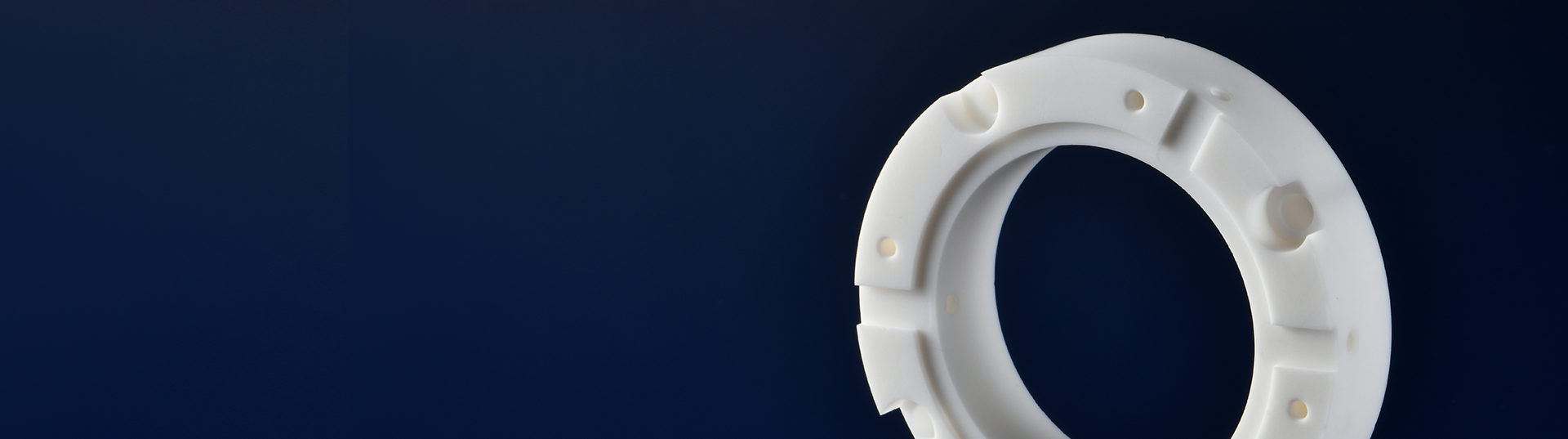
Macor Machinable Ceramics

MACOR® Machinable Glass-Ceramic (MGC) by Corning combines ceramic performance with the versatility of high-speed steel (HSS) machining. With zero porosity (no outgassing) and 1000°C peak heat resistance, it is the industry standard for Aerospace, Quantum, UHV, and Medical precision components.
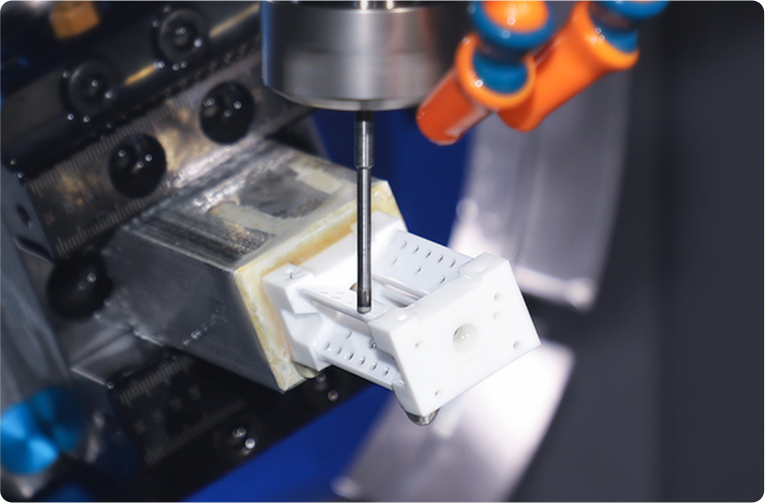
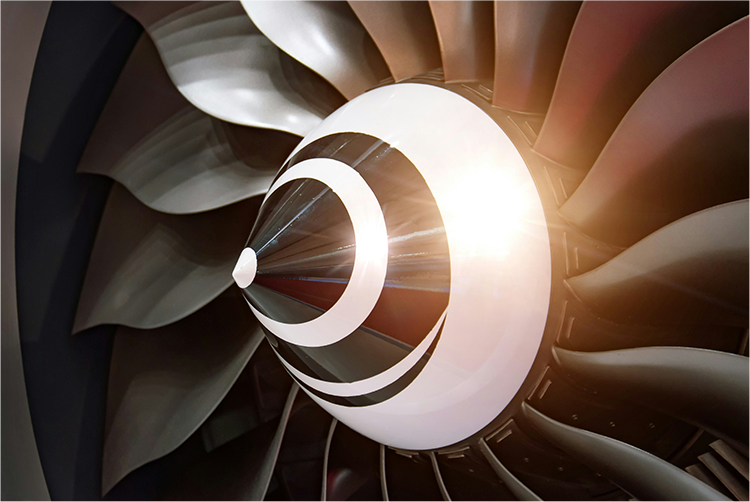
Machining Capability

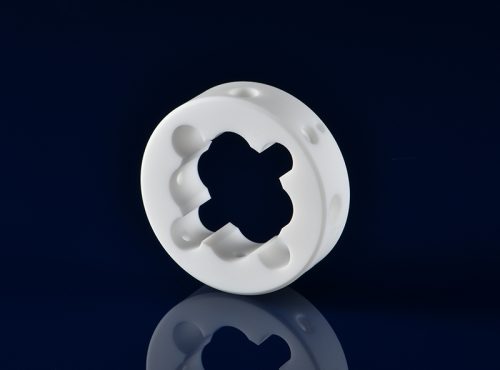
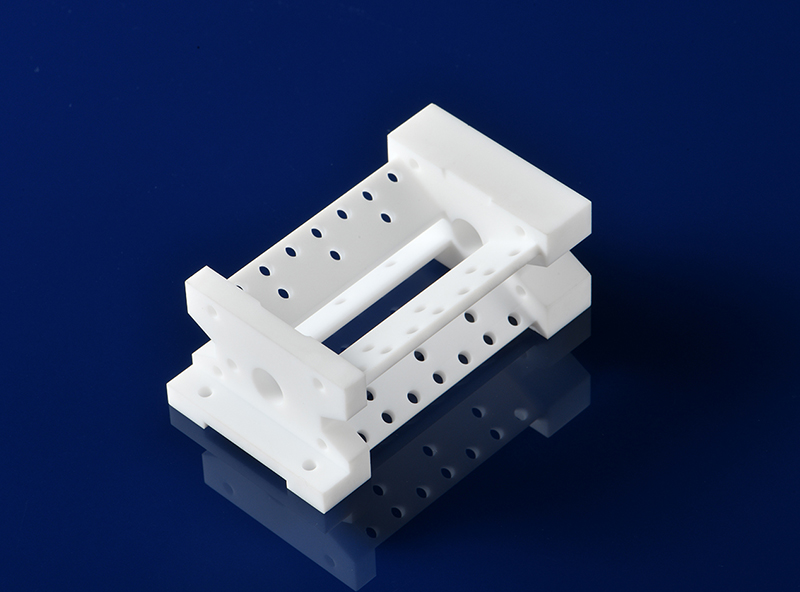
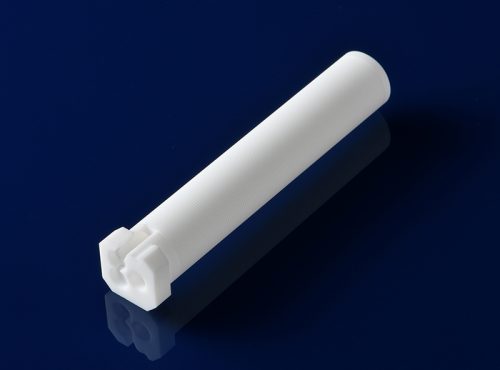
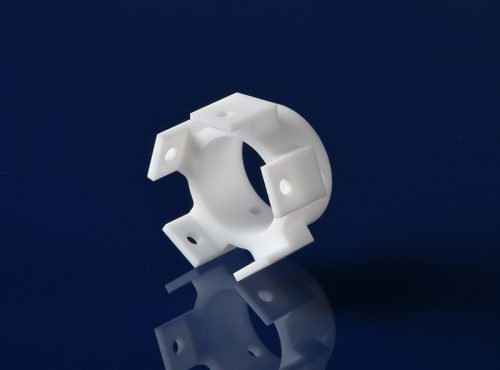
We specialize in precision CNC machining of MACOR® and SHAPAL™ HI-M components for vacuum, quantum optics, semiconductor, and advanced research systems. With 3- to 5-axis machining capabilities, we produce complex geometries with tight tolerances, controlled flatness, and fine surface finishes. Our components deliver stable performance in UHV, high-temperature, and electrically insulating environments.

Macor Machining Capability
Tolerance ±1um
Flatness 2um(300*300)
Roughness Ra0.03μm
Micropores 0.05mm
Internal Thread M1.2
Max. Size 330*330*57mm

Advantages

  • Easily machinable with standard metalworking tools-no post-firing needed
  • Ultra-tight tolerances:up to 0.0005 in (0.013 mm).
  • Non-porous UHV-friendly:zero outgassing,ideal for vacuum systems.
  • High temperature stability:continuous use up to 1000C.
  • Excellent insulator:low thermal conductivity.
  • Chemical resistant:withstands acids,bases,and solvents.
  • High strength rigidity:no creep or deformation at high temperatures.

Properties

MACOR® features a fine-grained microstructure with zero porosity, ensuring low outgassing and stable performance in vacuum environments. Its controlled thermal expansion and dielectric properties provide reliable dimensional stability and electrical insulation under temperature and voltage stress.

Thermal SI/Metric Imperial
CTE -100°C – 25°C 81 × 10⁻⁷ /°C 45 × 10⁻⁷ /°F
CTE 25°C – 300°C 90 × 10⁻⁷ /°C 50 × 10⁻⁷ /°F
CTE 25°C – 600°C 112 × 10⁻⁷ /°C 62 × 10⁻⁷ /°F
CTE 25°C – 800°C 123 × 10⁻⁷ /°C 68 × 10⁻⁷ /°F
Specific Heat, 25°C 0.79 kJ/kg·°C 0.19 Btu/lb·°F
Thermal Conductivity, 1.46 W/m·°C 10.16
Thermal Diffusivity, 25°C 7.3 × 10⁻⁷ m²/s 0.028 ft²/hr
Continuous Operating 800°C 1472°F
Maximum No Load 1000°C 1832°F
Mechanical SI/Metric Imperial
Density 2.52 g/cm³ 157 lbs/ft³
Porosity 0% 0%
Young's Modulus, 25°C 66.9 GPa 9.7 × 10&sup6; PSI
Poisson's Ratio 0.29 0.29
Shear Modulus, 25°C 25.5 GPa 3.7 × 10&sup6; PSI
Knoop Hardness, 100g 250 kg/mm²
Modulus of Rupture, 25°C 94 MPa (Minimum 13,600 PSI
Compressive Strength 345 MPa (up to 900 49,900 PSI
Electrical SI/Metric Imperial
Dielectric Constant, 25°C
1 kHz 6.01 6.01
8.5 GHz 5.64 5.64
Loss Tangent, 25°C
1 kHz 0.004 0.004
8.5 GHz 0.0025 0.0025
Dielectric Strength (AC) 45 kV/mm 1143 V/mil
Dielectric Strength (DC) 129 kV/mm 3277 V/mil
DC Volume Resistivity, 10¹⁷ Ohm·cm 10¹⁷ Ohm·cm

Interested in Our Macor Ceramic Solutions?

Macor ceramics application

Applications

  • UHV Vacuum:Feedthroughs,insulators.
  • Semiconductor:Fixtures,precision parts.
  • Scientific Instruments:Mass spectrometers,ion traps.
  • Medical:Surgical and diagnostic components.
  • Aerospace /Propulsion:lon thruster insulators.
  • Plasma High Voltage:Electrode holders,structural supports.
  • Coils Magnetics:High-precision coil formers.

Cases

Learn how to use five-axis machining to create complex shapes

FAQS

What is the typical lead time for custom Macor prototypes?
Since Macor requires no subsequent firing, we offer rapid prototyping services with a minimum lead time of only 5-10 business days. We also provide material performance comparisons and selection advice (e.g., a comparison between Macor and Shapal HI-M) to help you choose the most cost-effective solution.
Do machined Macor parts require any additional heat treatment?
No. One of the primary advantages of Macor is that it remains dimensionally stable during and after machining. Unlike other technical ceramics, there is no shrinking or warping because no post-firing is needed.
What is the minimum wall thickness you can machine in Macor?
We can machine Macor components with a minimum wall thickness of 0.05 mm, depending on part geometry and design requirements.
What is the minimum hole diameter and slot width you can achieve in Macor?
Our precision machining capability allows a minimum hole diameter of 0.05 mm and a minimum slot width of 0.2 mm in Macor parts, depending on the component design.
Do you support metallization, coating, or brazing for Macor components?
Yes, we support metallization, coating, and brazing processes for Macor components, enabling reliable joining with metals or enhanced surface performance for specific applications.

Macor is a machinable glass-ceramic made from fluorophlogopite mica crystals embedded in a borosilicate glass matrix. This composition gives it a rare
combination of metal-like machinability, excellent electrical insulation, low thermal conductivity, and stability up to 1000°C (no load) while maintaining very tight tolerances.