
NewsQuality & Process
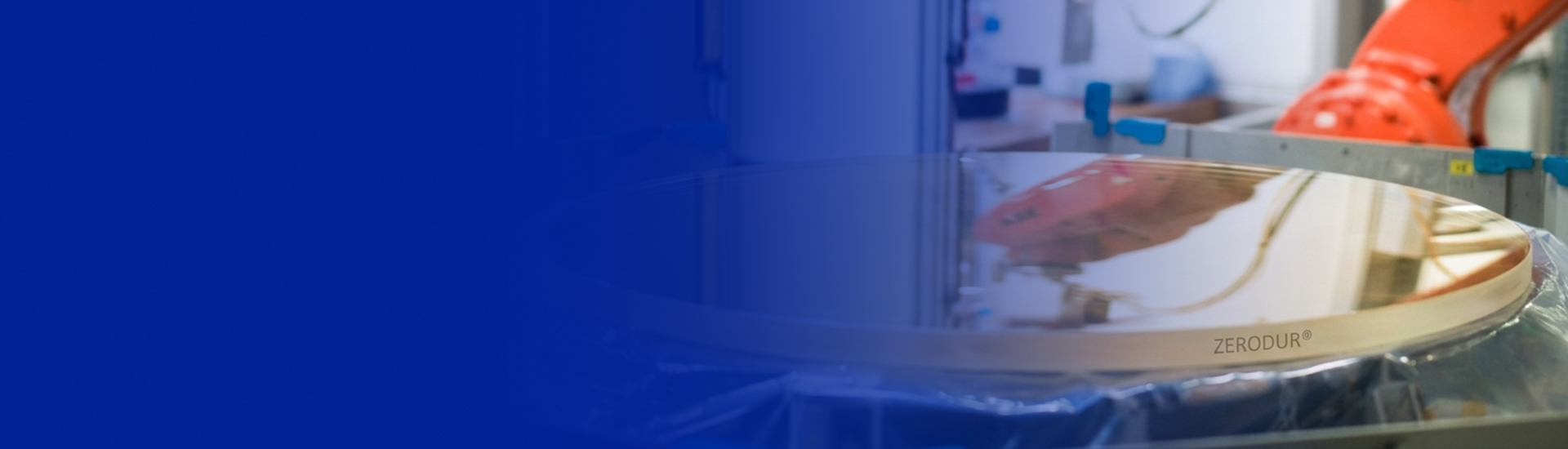
Both materials are highly stable, low thermal expansion glass-ceramic materials. Due to their excellent mechanical properties, they are frequently used in high-tech industries, such as astronomical telescope lenses, space exploration structural components, high-precision instruments, etc., which are equipment that is sensitive to temperature changes.
Low thermal expansion (CTE) refers to a material's minimal change in thermal expansion when temperature fluctuates. This characteristic gives it strong resistance to thermal shock, a major cause of material cracking in practical applications. The most well-known low-expansion glass materials are undoubtedly Schott Zerodur and Corning ULE, both possessing near-zero CTE. Below are some common low-expansion glass materials.
| Material | CTE (×10⁻⁶/K) | Transparency |
|---|---|---|
| Zerodur | ~0 ±0.02 | Slight yellow tint |
| ULE | ~0 ±0.03 | Transparent |
| Clearceram | ~0 ±0.01 | High transparency |
| Fused Quartz | ~0.5 | High transparency |
| Borosilicate (BF33) | ~3.3 | Transparent |
From the table above, it's easy to see that Clearceram glass offers higher transparency, making it more suitable for optical applications.
Zerodur, on the other hand, boasts better structural rigidity, making it more suitable for mirrors. Furthermore, the following case study demonstrates that Clearceram-Z exhibits excellent performance in high-precision optical systems requiring extremely high thermal stability. Meanwhile, Zerodur's higher flexural strength gives it an advantage in aerospace mirrors subjected to high mechanical stress.
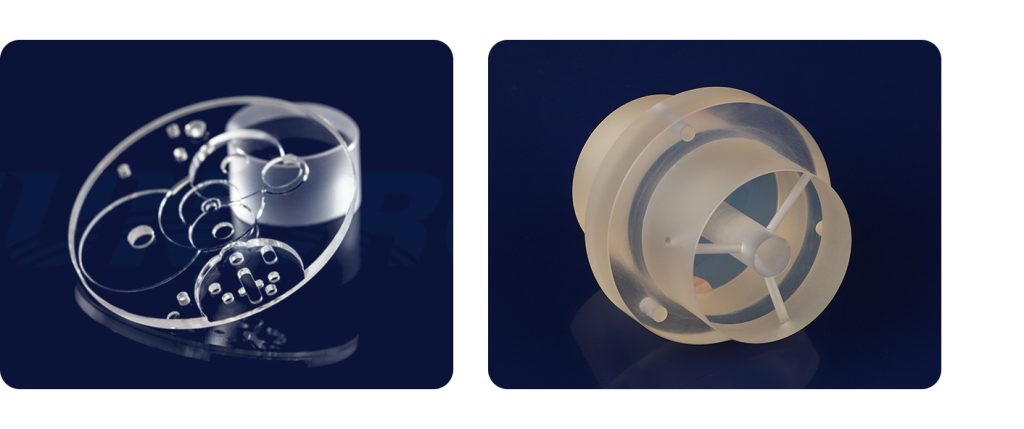
Source: Dimensional stability study (referenced via PubMed)
Methodology:
Mirror substrates made from Zerodur and Clearceram-Z were subjected to thermal cycling between –40°C and +90°C to evaluate dimensional stability under extreme temperature variations.
Results:
Conclusion:
Clearceram-Z demonstrated superior dimensional stability, making it particularly suitable for ultra-precision optical systems, such as astronomical telescope mirrors and high-resolution imaging equipment.
Source: Comparative acid immersion studies by OHARA Corporation and Schott AG
Methodology:
Samples of Clearceram and Zerodur were immersed in a 10% hydrochloric acid (HCl) solution for 24 hours to evaluate chemical durability.
Findings:
Conclusion:
Both Clearceram and Zerodur exhibit outstanding chemical stability, making them suitable for use in harsh or chemically aggressive environments, such as semiconductor and laboratory applications.
Source: Technical analysis by Schott AG
Key Insight:
Zerodur demonstrates higher flexural strength compared to Clearceram, providing better resistance to mechanical stress and structural loading.
Engineering Implication:
This makes Zerodur a preferred choice for aerospace mirror systems and structural components, where materials must withstand both thermal stability requirements and mechanical stress.
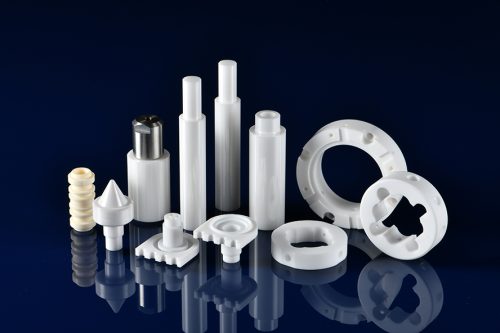
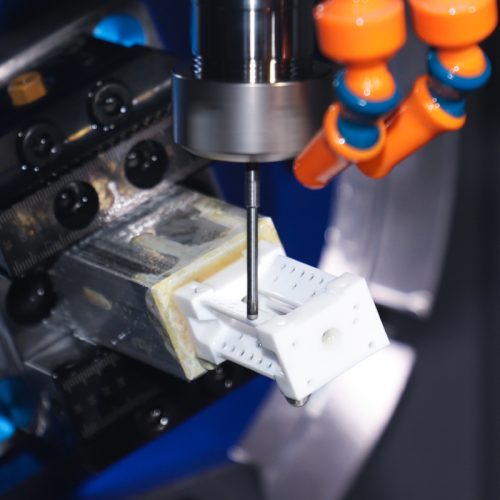
When working with ultra-low expansion materials like Zerodur or Clearceram, machining capability matters just as much as material selection. These materials are stable, but also brittle and sensitive to processing conditions.
In practice, factors like tool selection, stress control during machining, and experience with optical-grade components can make a significant difference in the final result.
We have hands-on experience machining Zerodur and similar glass-ceramics, including complex geometries and tight tolerance parts. If you're working on a related project, feel free to reach out—we’re happy to take a look and share some feedback.

Chinese (Simplified)
English
German
Japanese

Spanish
Floors 1-2, Building 3, Qianyuan Industrial Park, No. 2 Gaoxin 2nd Road, Dalang Town, Dongguan, Guangdong, China(523770)