MaterialsComparison

Ceramic Material Comparison

Not sure which ceramic material is right for your application? Use this comparison chart to evaluate common ceramic materials across key material properties.

Compressive Strength

Ac ne quis a nobis hoc ita dici forte miretur, quod alia quaedam in hoc facultas sit ingeni, neque haec dicendi ratio aut disciplina, ne nos quidem huic uni studio penitus umquam dediti fuimus. Etenim omnes artes, quae ad humanitatem pertinent, habent quoddam commune vinculum, et quasi cognatione quadam inter se continentur.

  • Fullscreen View
  • Print Chart
  • Download PNG
  • Download JPEG
  • Download SVG
  • Download CSV
  • Download XLS

Intrested in Our Ceramic Solutions?

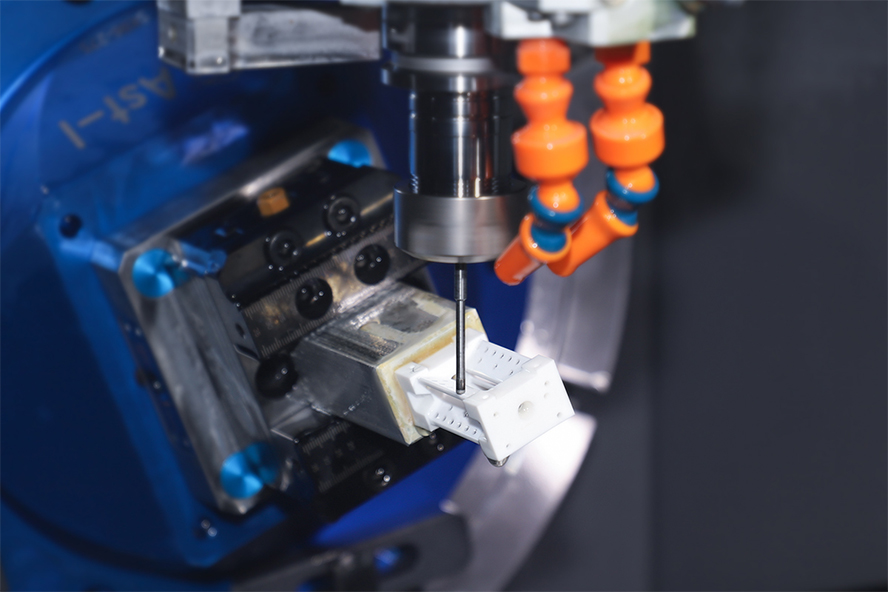
Technical ceramics machining services

Precision machining for advanced ceramics including Al₂O₃, AlN, SiC, Macor®, and Zerodur®. We deliver tight tolerances, complex geometries, and high-quality finishes for semiconductor, aerospace, and medical applications.

FAQs

How to select the best ceramic material based on thermal, mechanical, and electrical properties?
Selecting the right ceramic material requires balancing thermal conductivity, mechanical strength, and electrical insulation. For heat dissipation applications, aluminum nitride offers high thermal conductivity, while alumina provides a cost-effective balance of strength and insulation. Zirconia is preferred for high toughness, and silicon carbide excels in extreme environments. The optimal choice depends on operating temperature, load conditions, and electrical requirements. Evaluating these properties together ensures reliable performance and long service life in demanding applications.
Which ceramic material offers the best combination of high thermal conductivity and electrical insulation?
Aluminum nitride (AlN) provides one of the best combinations of high thermal conductivity and excellent electrical insulation among advanced ceramics. It is widely used in power electronics and semiconductor applications where efficient heat dissipation is critical. Compared to alumina, AlN offers significantly higher thermal conductivity, while maintaining strong dielectric properties. This makes it ideal for substrates, heat sinks, and electronic packaging requiring both thermal management and electrical isolation.
How do differences in coefficient of thermal expansion affect material selection in precision applications?
The coefficient of thermal expansion (CTE) determines the extent to which a material expands or contracts with changes in temperature. In precision applications, differences in the CTE between different materials can lead to stress, deformation, and even failure. For example, Zerodur and ULE have near-zero thermal expansion, making them suitable for ultra-stable environments. Selecting materials with matching CTEs can ensure dimensional stability, especially in optical systems, semiconductor devices, and high-precision components.
What is the impact of thermal conductivity on heat dissipation performance in ceramic components?

Thermal conductivity directly affects how efficiently heat is transferred within or away from a component. High thermal conductivity ceramics, such as aluminum nitride and silicon carbide, enable rapid heat dissipation, reducing thermal stress and improving system reliability in high-power applications.In contrast, low thermal conductivity materials like Macor and zirconia are ideal for thermal insulation. They help maintain temperature stability, minimize heat loss, and protect sensitive components from thermal interference. These materials are commonly used in precision instruments, vacuum systems, and applications where thermal isolation is critical.Selecting the appropriate thermal conductivity ensures optimal performance, whether the goal is heat dissipation or thermal insulation.

Which ceramic materials maintain stable mechanical strength at high temperatures?
Silicon carbide and alumina are known for maintaining strong mechanical properties at elevated temperatures. Silicon carbide performs exceptionally well in extreme environments, offering high strength, oxidation resistance, and thermal stability. Alumina also retains good strength at high temperatures and is widely used in industrial and semiconductor applications. These materials are ideal for components exposed to thermal cycling, high loads, and harsh operating conditions.
What are the key performance trade-offs between thermal conductivity, strength, and machinability in ceramics?
There is often a trade-off between thermal conductivity, mechanical strength, and machinability in ceramic materials. High thermal conductivity materials like aluminum nitride and silicon carbide are typically harder and more difficult to machine. In contrast, machinable ceramics such as Macor offer excellent processing flexibility but lower thermal performance. Selecting the right material involves balancing performance requirements with manufacturing complexity and cost to achieve the best overall solution.

Vbi curarum abiectis ponderibus aliis tamquam nodum et codicem difficillimum Caesarem convellere nisu valido cogitabat, eique deliberanti cum proximis clandestinis conloquiis et nocturnis qua vi, quibusve commentis id fieret, antequam effundendis rebus pertinacius incumberet confidentia, acciri mollioribus scriptis per simulationem tractatus publici nimis urgentis eundem placuerat Gallum, ut auxilio destitutus sine ullo interiret obstaculo.